
What should renters confirm before booking a private pool?
Renters should confirm the pool’s barriers, access instructions, supervision expectations, depth, emergency communication, schedule, and host rules before booking. These details don’t guarantee that a property is safe, but they reveal whether the space fits your group, particularly when children, inexperienced swimmers, or nighttime use are involved.
A listing photo rarely answers every practical question. Ask who controls the gate, whether another adult must supervise swimmers, and how you’ll enter the pool area without arriving early or wandering into private parts of the property.
The same questions matter for a small family gathering and a larger group, although a larger group may need clearer guest limits and a specific plan for supervision. A private pool also shouldn’t be treated like a public aquatic facility. Unless the host specifically says otherwise, assume there is no lifeguard and plan accordingly.
Local fencing rules, permits, occupancy limits, HOA restrictions, leases, insurance terms, and short-term rental requirements can vary. Guidance from organizations such as the CDC and CPSC is useful for asking informed questions, but it isn’t a universal legal checklist for every private pool.
How should renters check barriers and controlled access around the pool?
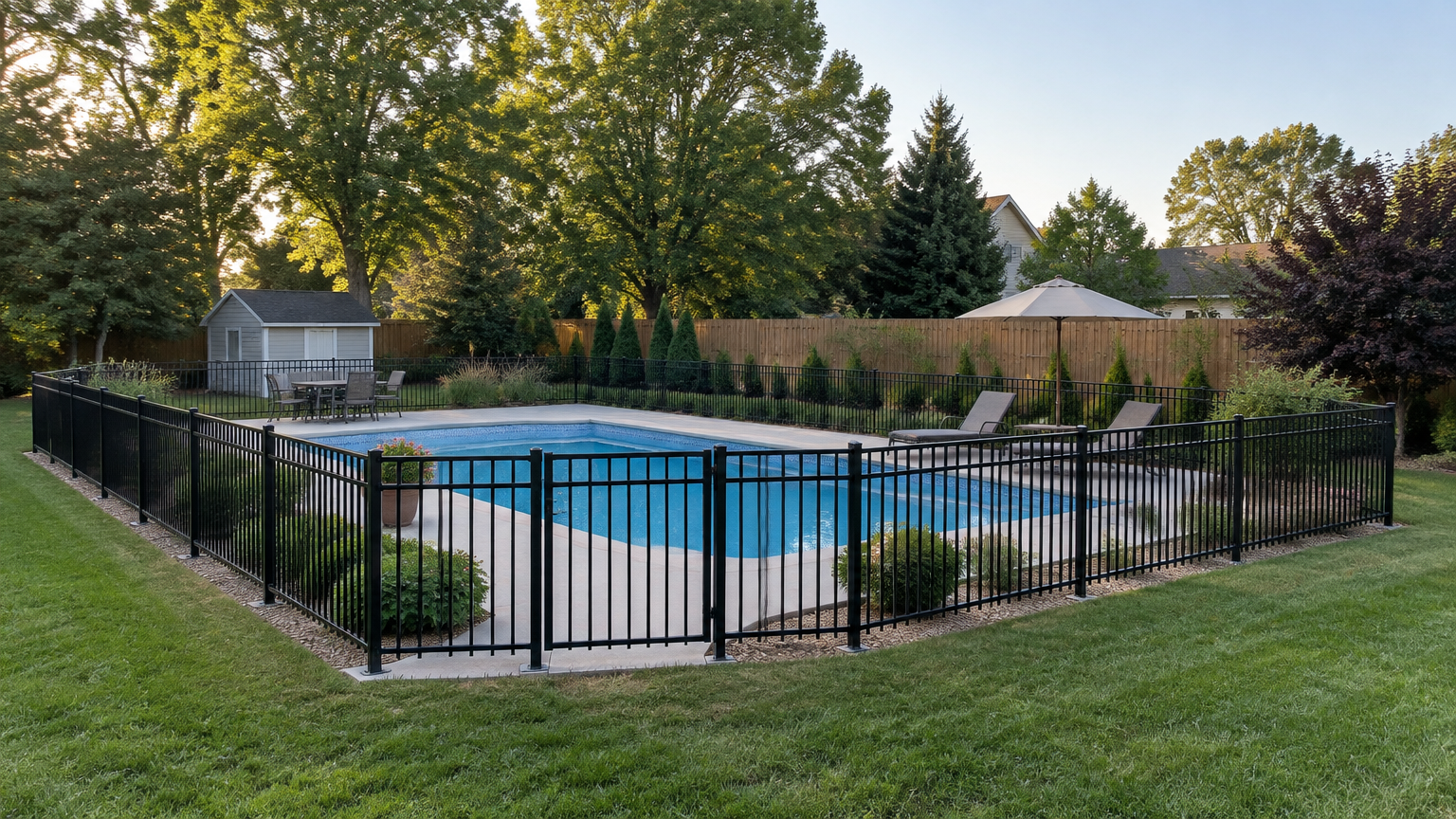
For families with young children, access control deserves attention before the booking is confirmed. Ask whether a four-sided barrier separates the pool from the house and yard, whether the gate closes and latches on its own, and whether doors or alarms add another layer of protection. These are safety guidance points, not automatic proof of compliance with local law.
Use these four questions when reviewing the listing or messaging the host:
- Is the pool fully separated from the home and yard? A fence or wall that surrounds all four sides of the pool can make it harder for a child to reach the water unnoticed. Ask whether the home or an open section of yard forms part of the boundary.
- Does the gate self-close and self-latch? Ask where the gate is located, how it opens, and whether it stays secured after someone walks through. A gate that depends on every guest remembering to close it may create confusion.
- Are there additional access controls? Doors leading toward the pool, door alarms, pool alarms, or a safety cover may provide another layer of protection. Ask which features are present and whether renters are expected to operate them.
- Could a child reach the water before an adult notices? Consider paths from the house, patio, driveway, and play areas. If the answer is unclear, request a current explanation or photo from the host rather than relying on an older listing image.
The CDC recommends a four-sided fence at least four feet high that fully encloses a home pool, along with a self-closing and self-latching gate. The CPSC also discusses barriers such as fences, walls, alarms, covers, and secure gates. Those recommendations can guide your questions, but a barrier is one layer of protection, not a guarantee of safety.
At arrival, check that the access arrangement matches what you were told. Don’t prop open a gate, disable an alarm, or leave a barrier unsecured while people are using the pool.
Who will supervise swimmers during the reservation?
The renter should identify an attentive adult water watcher before anyone gets in the pool. A host being somewhere on the property does not count as supervision unless the host clearly agrees to take that responsibility. Private pools also should not be assumed to have lifeguards.
Decide who will watch the water, especially if children or weak swimmers are present. That person should focus on swimmers rather than reading, socializing, drinking alcohol, or using a phone. The CDC and American Red Cross both emphasize that drowning can happen quickly and quietly, so casual observation from a nearby chair isn’t enough.
Children still need close supervision after swimming lessons. For infants and toddlers, the American Academy of Pediatrics advises touch supervision, with an adult in the water and within arm’s reach. That is more specific than simply having an adult somewhere near the pool.
Ask the host:
- Is a lifeguard present for any part of the reservation?
- Must renters provide their own supervising adult?
- Are children allowed in the pool area without an adult?
- Is swimming alone prohibited?
- Are there limits on the number of swimmers or guests?
A water watcher may need to change during a longer reservation so the person stays alert. Agree on that plan before arrival. Flotation toys, swimming ability, and lessons shouldn’t replace active supervision.
What depth and water-entry rules should renters ask about?
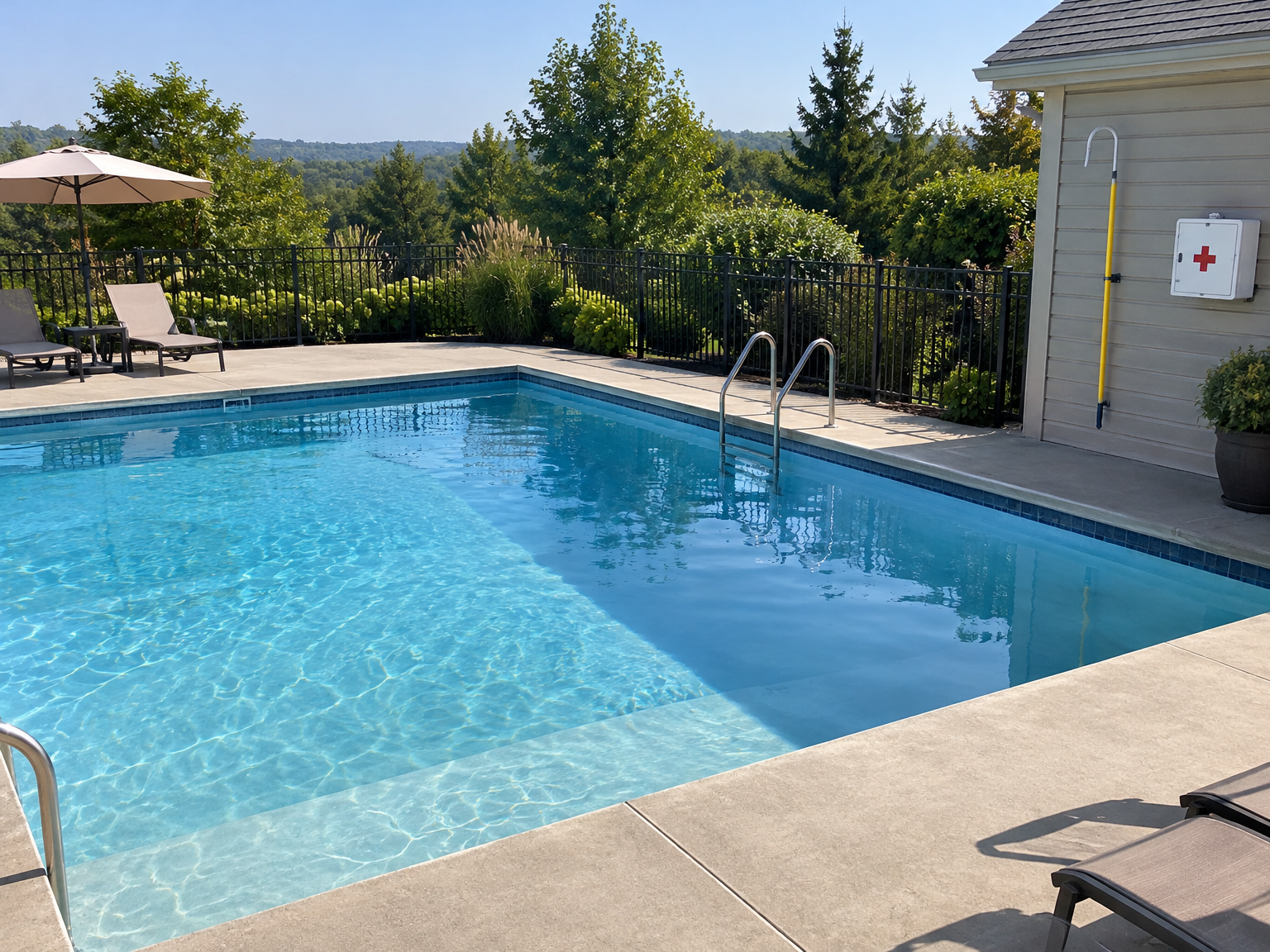
Renters should request the shallow-end and deep-end depths, ask about sudden changes in depth, and confirm whether diving, jumping, slides, or diving boards are allowed. Swimmers should never dive into water that is too shallow or whose depth is unknown, and no single depth rule applies to every pool or activity.
Ask whether depth markings are visible in the pool area and whether the listed measurements describe the water’s current condition. A pool may have a gradual slope, a sudden drop-off, steps, a ledge, or a section that looks deeper or shallower than expected.
The host should also explain the pool’s water-entry rules. Useful questions include:
- Is diving prohibited everywhere?
- Is jumping allowed from the deck or only from a specific location?
- Is there a diving board or slide, and who may use it?
- Are children allowed in the deep end?
- Are inexperienced swimmers expected to stay in a particular area?
- Does the pool have steps, a ladder, or another way to exit?
The American Academy of Pediatrics advises checking water depth before diving and avoiding water that isn’t deep enough or whose depth is unknown. That advice is especially relevant when a pool has no visible depth markings. Never treat a host’s statement that a pool is “deep enough” as a substitute for clear depth information and posted rules.
If someone in your group has limited mobility, ask about steps, ladders, handrails, deck surfaces, and the route from the entrance to the water. Don’t assume a private pool provides a particular accessibility feature unless the host confirms it.
What emergency information should be ready before arrival?
Before the reservation begins, renters should know the property’s exact location, how to call emergency services, how to reach the host, and where any phone, rescue aid, or first-aid supplies are located. Emergency equipment can support a response, but it doesn’t replace supervision, training, or safe rescue decisions.
Keep these four details available rather than trying to find them during a crisis:
- The exact property location: Save the address and any useful entrance instructions. A gated driveway, separate pool entrance, or difficult-to-see house can slow down responders if guests don’t know where to direct them.
- The emergency contact method: Confirm how to call 911 from the property and whether cell service is reliable in the pool area. If the host provides another emergency communication method, learn how it works before swimming.
- The host’s contact information: Know how to reach the host about access problems, injuries, or a sudden change in the reservation. Don’t assume the host will respond immediately or be nearby.
- The location of available equipment: Ask whether a reaching or throwing aid, first-aid kit, phone, or other emergency item is available and where it is stored. Equipment should be easy to find without entering a locked room or leaving swimmers unattended.
The Red Cross recommends knowing how to call emergency medical services and help someone in trouble without putting yourself in danger. A person who cannot swim should not jump into deep water to attempt a rescue. If an emergency occurs, call for help and follow the instructions of emergency responders.
You can also ask whether pool chemicals are stored away from swimmers and children. Chemical storage is separate from the renter’s main safety checklist, but it matters when children may explore the yard or pool area.
Which host rules and scheduling details need confirmation?
A safe booking also depends on clear boundaries. Renters should confirm the reservation time, permitted guests, supervision expectations, prohibited behavior, and practical rules for items such as food, glass, pets, flotation devices, weather, and cleanup. Hosts control their own availability and access rules.
Ask about these five areas before paying for the reservation:
- Arrival and departure times: Confirm when access begins, whether early arrival is allowed, and when everyone must leave. A renter who arrives early may not have permission to enter the pool area.
- Guests and children: Check the maximum number of people, whether all guests must be included in the booking, and whether children count toward the limit. Ask about outside visitors and spectators too.
- Supervision and swimming alone: Find out whether a responsible adult must remain with children or inexperienced swimmers and whether anyone may use the pool alone.
- Prohibited behavior: Ask about running, rough play, diving, alcohol, smoking, and other conduct that could create risk or violate the host’s rules. Don’t assume normal backyard habits are allowed at a rented property.
- Items, weather, and cleanup: Confirm rules for glass containers, food, pets, personal flotation devices, pool toys, storms, rain, and cleanup. Ask what happens if weather makes swimming unsafe or the host needs to change access.
Keep important answers in the booking conversation when possible. Clear written instructions can prevent a disagreement about whether a guest, activity, or arrival time was allowed.
Scheduling matters because pool access is limited to the reserved period. Confirm whether another group will use the property before or after you, whether the host will meet you, and whether a locked gate or key code changes at the scheduled time. Parking Mate lets hosts control their availability and access rules, so read the listing and follow the host’s instructions rather than assuming every pool uses the same process.
What should renters do if important safety details are missing?
Missing information shouldn’t be brushed aside when it affects children, supervision, access, depth, or emergency response. Review the listing, ask the host direct questions, and reconsider the booking if essential answers remain unclear. Parking Mate can help you review pool listings and schedules, but it doesn’t inspect or certify pool safety.
Take these three steps:
- Read the listing carefully: Check the description, photos, available schedule, guest limits, access instructions, and stated pool rules. Look for details about fencing, gates, depth, diving, supervision, and weather.
- Ask focused questions: Send a short message covering the specific gaps. For example: “Is the pool fully enclosed by a fence?” “What are the shallow and deep depths?” “Who is responsible for supervising children?” and “Where is the emergency equipment?”
- Pause or reconsider the booking: If the host cannot provide clear information about a major safety concern, choose a different listing or wait until the issue is resolved. A low price or convenient time isn’t a reason to accept unknown access or supervision conditions.
You can browse private pool listings on Parking Mate and review the available schedule before contacting a host. The platform connects renters with hosts who list unused spaces, but it does not independently verify barriers, water depth, emergency equipment, lifeguards, insurance, legality, or overall pool condition.
For another practical resource, see these private pool booking questions renters should ask. The goal is simple: arrive knowing who is responsible, where you may go, what activities are allowed, and what to do if something goes wrong.
Related reading
Frequently asked questions
Should renters assume a private pool has a lifeguard?
No. Unless the host clearly confirms that a qualified lifeguard will be present, renters should plan for their own attentive adult supervision.
What barrier details should renters ask about?
Ask whether a four-sided barrier separates the pool from the house and yard, whether the gate is self-closing and self-latching, and whether doors or alarms provide additional access control.
Why should renters confirm pool depth?
Depth information helps swimmers understand where people can stand and whether diving, jumping, slides, or diving boards are allowed. Swimmers should not dive into water that is too shallow or whose depth is unknown.
What should renters do when a listing leaves out key safety information?
Review the listing, ask the host direct questions, and reconsider the booking if essential details about access, supervision, depth, emergencies, or rules remain unclear.