
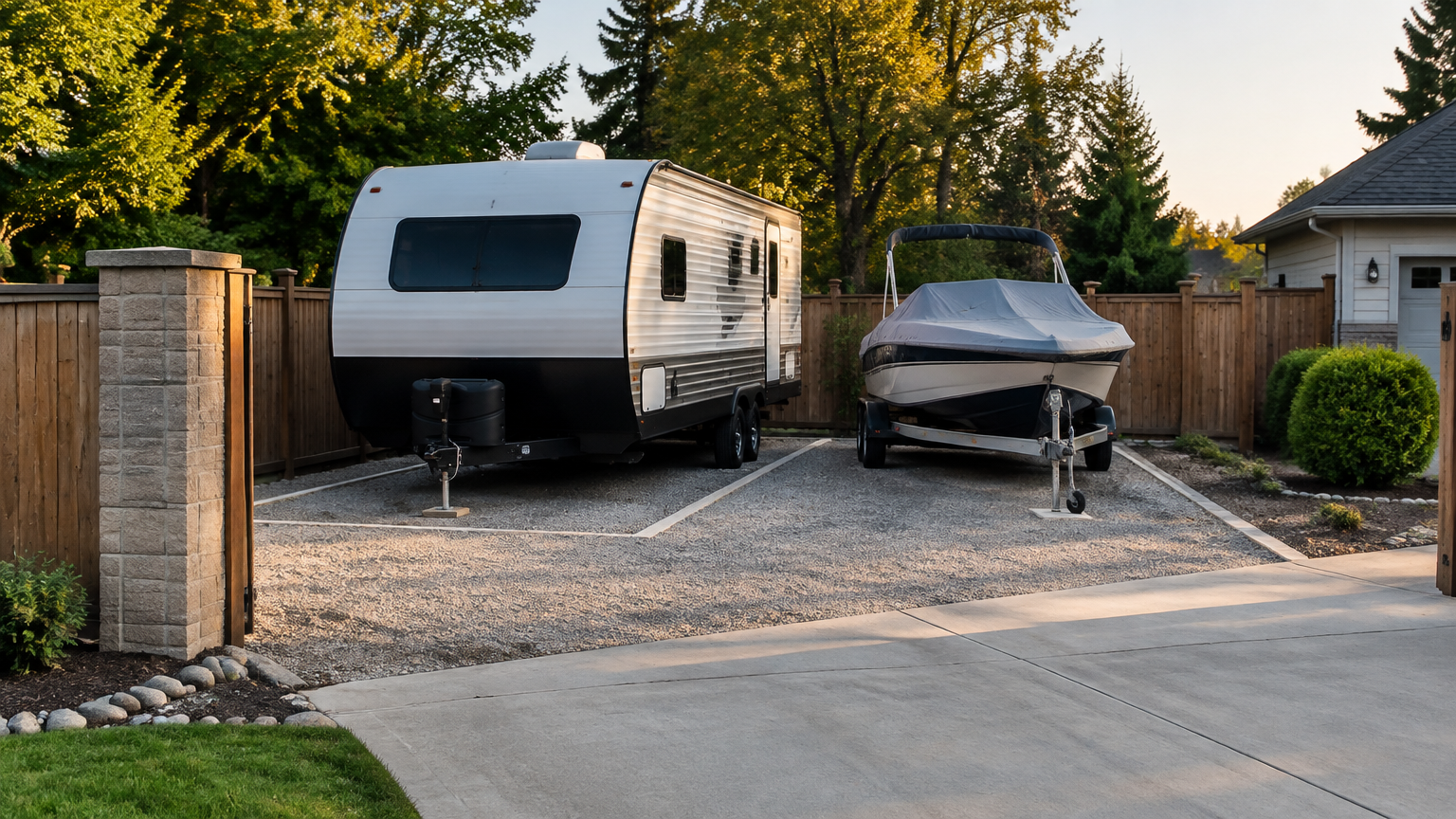
Who may be responsible when an RV or boat is damaged during storage?
Responsibility is not automatically assigned to the host or renter. Separate damage to the stored vehicle, damage caused by that vehicle, and damage to the host’s property. The likely result depends on the cause, control of the property, booking terms, negligence, and applicable state law.
For example, a storm-damaged RV, a trailer that hits a fence while arriving, and a boat stolen from a lot are different losses. They may involve different insurance policies and different questions about who had control of the vehicle or storage area.
Responsibility may turn on several facts:
- Did the host provide an unsafe gate, surface, route, or parking area?
- Did the renter follow the arrival and access instructions?
- Did either party move, tow, unlock, or otherwise handle the RV or boat?
- Was the damage already present before the booking?
- Did poor maintenance, an unsecured trailer, leaking fluids, or improper weather preparation contribute?
- Did a third party, storm, falling branch, fire, theft, or vandalism cause the loss?
A host who rents a marked space may not have the same legal duties as a commercial storage company that takes possession of a customer’s property. Cornell’s explanation of a bailee describes a party that receives someone else’s property for a specific purpose, but that concept does not automatically apply to every private storage booking.
Parking Mate connects hosts and renters for storage, lot, indoor, and outdoor bookings. It is not an insurer, lawyer, or guarantor of reimbursement. The platform can help parties clarify listing details, dates, access rules, and permitted use, but each side still needs to review its own insurance and the actual booking terms.
How do insurance policies usually divide RV and boat storage risks?
Insurance questions are easier to understand when the loss is separated into physical damage to the RV or boat, liability for damage to someone else’s property, and possible damage to the host’s premises. Comprehensive, collision, and liability coverage address different risks, and no policy pays every claim automatically.
| Coverage or policy | Damage or risk it may address | Question to ask before booking |
|---|---|---|
| RV or boat comprehensive coverage | Covered non-collision damage such as certain theft, vandalism, fire, weather, or falling-object losses | Does the policy cover this storage location, and what exclusions, deductible, and limit apply? |
| Collision coverage | Damage from a covered collision with a vehicle, object, fence, gate, or other property | Does the policy cover the vehicle or trailer during arrival, departure, and maneuvering? |
| Liability coverage | Injury or property damage the insured causes to another person or their property | Does the policy respond if the renter damages a driveway, fence, gate, landscaping, or another vehicle? |
| Trailer coverage | Damage to or liability involving an RV or boat trailer, depending on the policy | Is the trailer covered under the boat policy, auto policy, or a separate endorsement? |
| Homeowners insurance | Certain home and personal liability risks, subject to the policy | Does paid storage activity create a business-use exclusion or limitation? |
| Renters or personal liability insurance | Some liability claims involving the renter’s actions or personal property | Does the policy cover damage caused while using another person’s premises? |
Progressive explains that RV comprehensive coverage may address covered events such as theft, vandalism, fire, weather-related damage, and falling objects, while collision coverage addresses a different group of losses. Its RV coverage explanation also makes clear that policy terms and deductibles matter.
Boat owners should ask similar questions. Progressive notes that boat comprehensive and collision coverage may apply to covered physical damage, including some theft, vandalism, weather, fire, and collision losses. Coverage may apply while a boat is in a driveway, marina, or storage location, but the actual policy controls.
Liability coverage generally is not a substitute for coverage on the owner’s own vehicle. RV liability insurance may address injury or property damage caused to others, but it generally does not pay for damage to the insured’s own motorhome. GEICO’s boat insurance information also describes how boat policies may address liability, physical damage, and trailers, with coverage varying by policy.
A host’s homeowners policy deserves separate attention. Standard homeowners insurance may limit or exclude business-related activity. The NAIC guidance on home-sharing insurance advises property owners to discuss paid activity with their insurer rather than assume ordinary home coverage applies.
What should an RV or boat renter confirm before booking storage?
A renter should review the vehicle’s policy, the listing, and the access plan before paying for storage. The key checks cover physical damage, liability, trailers, belongings, location restrictions, and out-of-pocket exposure. Renters can browse available lot spaces, but a listing should not replace an insurance review.
- Check physical-damage coverage. Ask whether comprehensive coverage applies while the RV or boat is unattended at the proposed location. Confirm how the policy treats theft, vandalism, storms, fire, falling objects, and water-related damage.
- Check liability coverage. Find out whether the policy may respond if the renter damages a fence, gate, pavement, landscaping, another vehicle, or a person while arriving, parking, towing, or leaving. Liability coverage usually concerns damage to others, not damage to the renter’s own RV or boat.
- Check trailer coverage. A boat trailer may be handled through a boat policy, auto policy, or endorsement. Do not assume it is covered merely because the boat itself has insurance. Ask about both physical damage and liability involving the trailer.
- Check personal belongings and equipment. Items inside an RV, boat, or trailer may have separate limits, exclusions, or conditions. Review coverage for tools, electronics, fishing equipment, personal items, and removable equipment rather than assuming the vehicle policy covers everything stored inside.
- Check storage-location restrictions. Tell the insurer where the vehicle will be kept and whether the booking is short-term, monthly, indoors, outdoors, or on a residential lot. Some policies may distinguish between locations, uses, or periods when the vehicle is not being operated.
- Check deductibles and limits. A policy may cover a type of loss while still leaving the renter responsible for a deductible or costs above the policy limit. Save the insurer’s guidance and ask what documents would be needed after a claim.
The physical fit matters, too. Confirm the total length, width, height, turning space, tow vehicle requirements, gate width, overhead clearance, surface, and departure plan with the host. A boat and trailer may fit in a straight driveway but fail when the tow vehicle needs to turn.
Parking Mate hosts set listing details, availability, pricing, and access rules. Renters should read those details carefully, ask questions through the available booking communication process, and avoid relying on an informal verbal promise that is not reflected in the booking information.
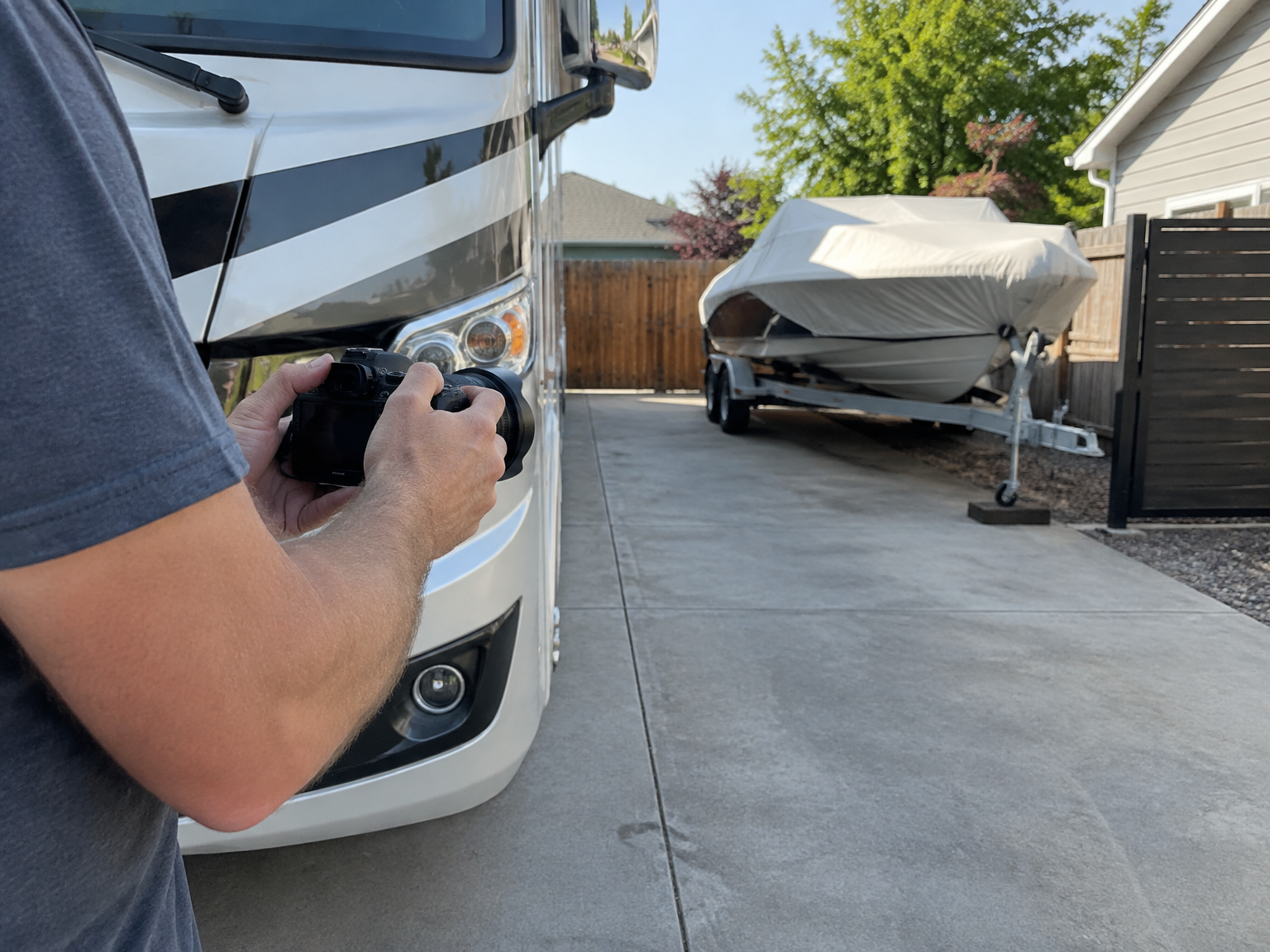
What should a host ask an insurer before renting out RV or boat space?
A host should tell the insurer about the planned paid storage activity before accepting bookings. The most useful conversation covers business-use exclusions, liability, damage to the property, and whether the current homeowners policy needs an endorsement or different form of coverage.
- Ask whether paid storage is treated as business activity. Renting a driveway, lot, yard, garage, or outdoor area may not be viewed the same way as allowing a friend to park there. Ask how the insurer classifies the activity and whether the policy contains a business-use exclusion.
- Ask what liability coverage applies. Discuss injuries or property damage connected with arrival, departure, access routes, gates, fences, pavement, landscaping, and other parts of the premises. Ask whether the policy treats visitors and paying renters differently.
- Ask whether damage to the premises is addressed. A large RV or boat trailer could damage a driveway, retaining wall, fence, gate, lawn, or drainage area. Find out what the policy says about accidental damage, exclusions, deductibles, and claims involving paid use.
- Ask whether another policy or endorsement may be appropriate. The insurer may explain whether the existing policy is sufficient, limited, or not intended for the activity. The answer varies by location, property, insurer, and the way the space is rented.
The Insurance Information Institute’s guidance on renting out a home warns that standard homeowners insurance generally does not cover business activities conducted in the home and that specialized coverage may be needed for rental activity. That does not establish one required policy for every host, but it is a reason to ask before listing.
Local rules deserve a similar check. A host may need to review city or county zoning, HOA restrictions, a lease, rules about outdoor RV or boat storage, drainage, setbacks, access, fuel, or nuisance conditions. These questions are location-specific. Parking Mate does not provide legal approval or insurance approval for a space.
Hosts who are considering the practical side of listing can read about how to rent out RV or boat storage space. The article should be treated as general planning information, not a replacement for a conversation with an insurance agent or local professional.
What should the booking terms say about access, movement, and existing damage?
Clear written terms reduce confusion about what the renter may do and what the host is providing. They should describe the space, access route, movement rules, condition concerns, maintenance limits, and reporting process. Written terms may clarify expectations, but they cannot automatically erase negligence or legal responsibility.
- Describe the vehicle and trailer dimensions. Record the approximate length, width, height, weight concerns if relevant, and whether a tow vehicle will arrive with the RV or boat. The host should confirm that the space can be reached without an unsafe maneuver.
- Identify the approved access route. Explain which driveway, gate, entrance, path, or surface the renter may use. Include turning limits, gate instructions, clearance concerns, and any areas that are off-limits.
- State who may move or tow the vehicle. If the host will not move the RV, boat, or trailer, say so. If movement may occur for an emergency or agreed maintenance reason, identify who may do it and how permission will be handled.
- Describe surface and clearance conditions. Note gravel, pavement, grass, slopes, low branches, narrow gates, soft ground, drainage areas, and other visible conditions. A renter should know about hazards before arrival, not after a trailer becomes stuck.
- Explain maintenance and leak responsibilities. State whether repairs, battery work, washing, fueling, winterizing, or other maintenance is allowed. Include a prompt reporting rule for oil, fuel, sewage, chemicals, or other leaks.
- Set a damage-reporting process. Identify how the parties should report damage, when photos should be taken, and which booking messages or records should be preserved. Prompt reporting is especially important when a leak, storm, fire risk, or unsafe condition could worsen.
A booking agreement may also address keys, gate codes, visitors, permitted equipment, weather exposure, pickup timing, and whether personal belongings may remain inside. Keep the language plain enough that both parties can understand it.
A release or liability limitation is not a universal answer. Its effect can vary by state, and it may not protect someone from intentional conduct, negligence, or a violation of applicable law. Commercial warehouse rules, including rules that may apply to a business taking custody of goods, should not automatically be applied to a peer-to-peer space host.
How should both parties document the space and vehicle before arrival?
Good documentation creates a shared record of condition and instructions. It cannot decide insurance coverage or prove legal liability by itself, but dated photos, written notes, and saved messages can make it easier to determine what happened and when.
- Take dated vehicle photos. Photograph each side of the RV, boat, and trailer, along with tires, hitch areas, windows, covers, lights, and visible damage. Include wide shots and close-ups so the condition is understandable later.
- Photograph the storage area. Record the driveway, lot, pavement, grass, fence, gate, landscaping, nearby structures, drainage, overhead branches, and other features near the approved parking position.
- Write down existing damage and hazards. Note dents, scratches, cracked lights, worn tires, leaks, stains, loose covers, soft ground, narrow turns, or broken gate hardware. A short written note can add context that a photo misses.
- Record access instructions. Save the agreed route, gate process, arrival window, clearance information, and instructions about who may enter or move the vehicle. Keep these details in the booking messages or another dated record.
- Confirm arrival and departure condition. Take another set of photos when the vehicle arrives and when it leaves. If either party notices a change, report it promptly and preserve the related messages, photos, and dates.
The renter should document the vehicle before handing over access or leaving it unattended. The host should document the space before arrival and after departure. Neither side needs a complicated inspection form, but both benefit from the same basic record.
For more ideas, readers can review how to document conditions before booking private parking and how to photograph RV and boat storage space. The goal is not to create a guaranteed claim outcome. It is to reduce uncertainty about pre-existing damage and the condition of the property.
What should happen after damage, theft, a leak, or a collision?
After an incident, protect people and property first, preserve evidence, and notify the other party and relevant insurer promptly. Avoid guessing who is at fault or promising payment before the facts, booking terms, policy language, deductibles, and local rules have been reviewed.
- Protect people and property. Move people away from unsafe areas, fire hazards, traffic, exposed wiring, unstable structures, or leaking fluids. Contact emergency services when there is an immediate danger or serious injury.
- Prevent additional damage when safe. Close a gate, stop a leak, cover exposed equipment, or move an object only when doing so is safe and permitted. Do not move the RV, boat, or trailer if movement could create more damage or destroy useful evidence.
- Photograph the scene. Capture the vehicle, trailer, fence, gate, driveway, tire marks, fallen branches, water, stains, damaged equipment, and surrounding conditions. Take wide images before close-ups whenever possible.
- Notify the other party promptly. Send a factual message that states what was found, when it was discovered, and what immediate steps were taken. Keep the tone neutral. Do not accuse the other party or admit fault before the facts are clear.
- Contact the relevant insurer and preserve records. The vehicle owner should contact the RV or boat insurer, while a host may need to contact the homeowners or other applicable insurer. Save the listing, booking details, photos, access instructions, receipts, witness information, and messages.
For theft or suspected vandalism, the affected party may also need a police report, depending on the circumstances and insurer’s instructions. For fuel, oil, sewage, chemicals, or other environmental concerns, contain the problem only if safe and contact the appropriate local authority or professional when necessary.
Parking Mate is not the claims decision-maker and does not guarantee reimbursement for storage damage. Use the platform’s contact page for questions about the marketplace or booking process, while insurance and legal questions should go to the applicable insurer or qualified professional.
The safest approach is to settle expectations before arrival: match the space to the vehicle, document condition, put access rules in writing, review insurance, and clarify who may move the RV, boat, or trailer. That preparation cannot prevent every storm, theft, collision, or disagreement, but it gives both parties a clearer record when something goes wrong.
Related reading
Frequently asked questions
Is a host automatically responsible if an RV is damaged on private property?
No. Responsibility depends on the cause of the damage, who controlled the relevant property, the booking terms, whether someone acted negligently, and applicable state law.
Does RV insurance cover damage while an RV is in storage?
It may cover certain theft, vandalism, weather, fire, falling-object, or other physical-damage losses, depending on the policy, exclusions, limits, and deductible.
Does homeowners insurance cover paid RV or boat storage?
Not necessarily. Business-related activity may be excluded or limited under a standard homeowners policy, so a host should discuss paid storage with an insurer.
What should renters document before storing an RV or boat?
Renters should photograph the vehicle, trailer, storage space, access route, gates, fences, pavement, and nearby hazards. They should also record existing damage and save written instructions.