
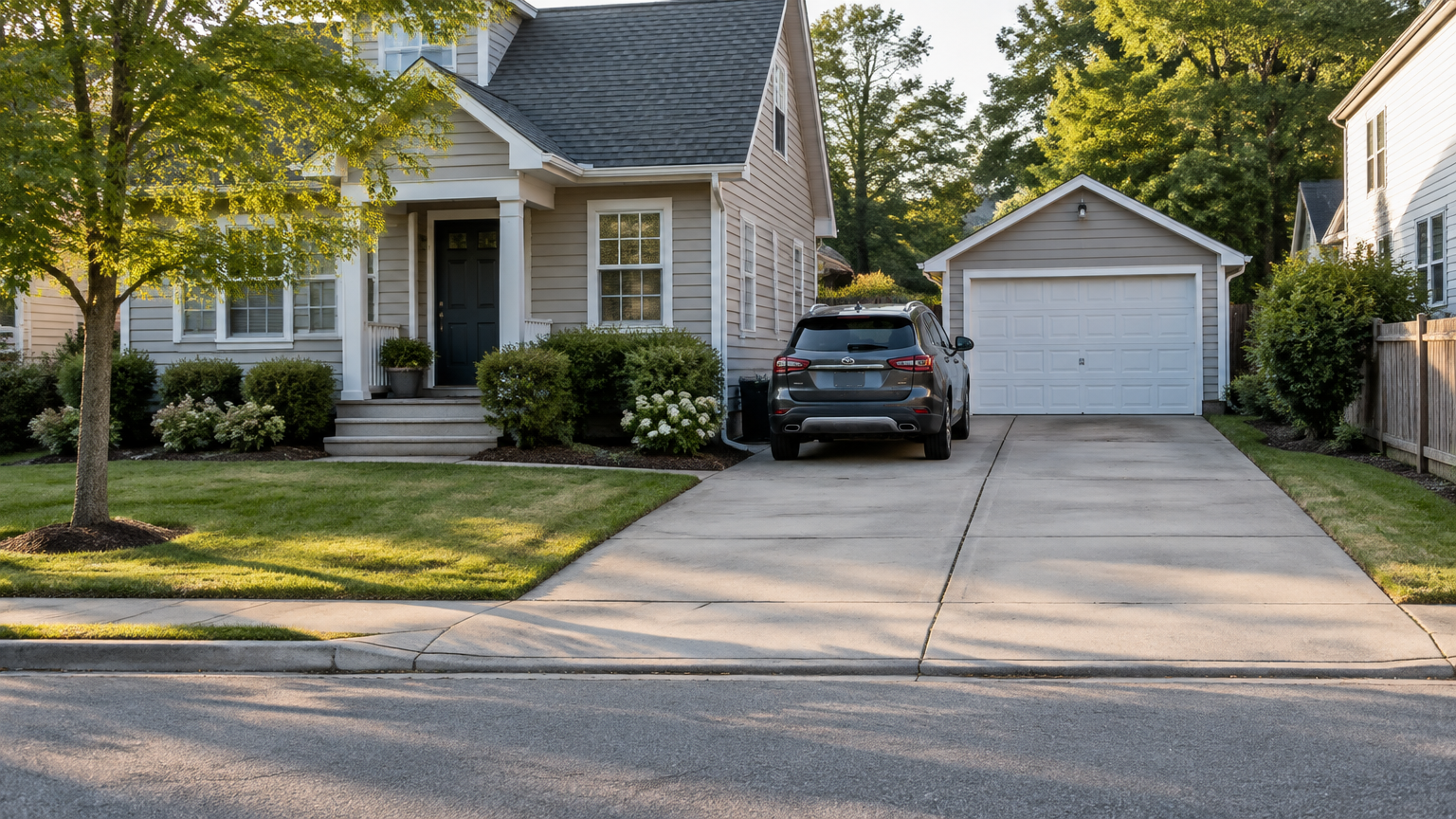
Can renting a private parking space affect your homeowners insurance?
Renting a driveway, garage, lot, or similar space may affect how your insurer views the property, but it does not automatically raise your premium or cancel your policy. Paid use can create questions about liability, property damage, business activity, exclusions, and whether you needed to disclose the rental first.
A private parking rental is not automatically the same as renting out a house or room. Still, money changes hands in exchange for using part of your residential property, so your insurance company may want to know more about the arrangement. The type of space, how often it is rented, who can access it, and whether renters are storing anything there may all matter.
The key issue is not simply whether a renter’s car is parked on your property. It is whether your homeowners policy covers the risks connected with that paid use. A claim could involve someone slipping on the driveway, a gate being damaged, a detached garage being used for vehicle storage, or a dispute about damage caused during a booking.
Your insurer may decide that your existing policy is sufficient, ask you to add an endorsement, recommend another type of policy, or explain that a particular loss is excluded. Those are possible outcomes, not universal rules. Policy exclusions and conditions control the outcome, so a general answer cannot replace a review of your actual policy.
The National Association of Insurance Commissioners notes that homeowners policies can vary when property is used for home-sharing or income-producing activity. The Insurance Information Institute also explains that insurers may treat occasional and regular rental activity differently. Neither source establishes one nationwide rule for every private parking space.
For that reason, contact your insurance company or licensed agent before accepting bookings. Describe the space honestly and explain whether you expect occasional event parking, hourly bookings, monthly renters, garage use, or vehicle storage.
Which parts of your homeowners policy could matter?
A host should review personal liability, structures, property damage, vehicle-related claims, and exclusions before renting a private parking space. Standard homeowners insurance may include several relevant coverage categories, but paid rental activity can change how those categories apply. Read the policy language and ask the insurer about each risk directly.
- Personal liability coverage may be relevant if a renter or visitor is injured while entering, leaving, or using the space. For example, a person might trip over an uneven surface or be hurt near a driveway gate. Your policy may include liability protection, but exclusions for paying guests, business activity, or other circumstances could limit it.
- Other structures coverage may matter when you rent a detached garage, carport, shed, or another structure separate from the main home. A structure can have coverage under a homeowners policy without every use being covered. Renting that space regularly or using it for storage may prompt different questions than simply parking a vehicle on an open driveway.
- Damage to the property deserves its own discussion with the insurer. A renter’s vehicle might strike a fence, gate, garage door, curb, or other part of the property. Ask whether your policy addresses the resulting damage, whether a deductible applies, and whether the paid rental activity creates an exclusion.
- Damage involving the renter’s vehicle or belongings is not automatically covered by your homeowners policy. Home insurance generally is not a substitute for the renter’s auto insurance, and you should not assume the renter’s policy will pay for every claim involving your driveway or structures. Ask what happens if a vehicle is stolen, vandalized, or damaged while parked there.
- Business-use or rental exclusions may be the most important issue for recurring bookings. Collecting payment for use of residential property can be viewed as business activity, particularly when the rental is regular or organized. A standard homeowners policy may restrict business-related liability or property losses. Your insurer can explain whether an endorsement, separate business policy, rental dwelling policy, or no policy change applies to your situation.
The space itself also matters. An open driveway may raise different questions from a locked garage, assigned condominium spot, backyard lot, or area used to store an RV or trailer. Tell the insurer exactly what the renter will receive and what activities are prohibited.
Does occasional parking differ from recurring or monthly rental?
Occasional event parking and recurring monthly rentals may be treated differently because insurers can view regular paid activity as more business-like. However, occasional use is not automatically covered, and monthly use is not automatically excluded. Give the insurer an accurate description of your expected frequency instead of choosing the description that sounds safest.
| Rental pattern | Insurance question to raise | Why the distinction matters |
|---|---|---|
| Occasional or event-style parking | Is a limited number of paid bookings covered under my current policy? | Some insurers may handle occasional activity differently, but you still need to ask about liability, property damage, and paying-guest exclusions. |
| Hourly or short-term bookings | Does repeated short-term use count as business activity? | Individual bookings may be brief, yet a pattern of frequent rentals could be viewed differently from an isolated arrangement. |
| Recurring weekly rental | Does a regular renter require an endorsement or separate coverage? | Repeated payments and predictable access may make the activity look more like an ongoing business use. |
| Monthly parking | Is the space being treated as a rental area, business property, or another use? | Monthly arrangements can involve longer access, storage questions, and different expectations about responsibility for damage. |
| Garage or storage use | Does coverage change because the renter has access to a structure or leaves property there? | A detached structure and stored belongings may raise issues beyond a vehicle parked outdoors. |
These categories are practical questions, not legal classifications. An insurer may ask how many bookings you expect, whether renters have independent access, whether you live at the property, and whether the space is used only for parking.
Parking Mate lets hosts set hourly or monthly availability, but the platform’s scheduling options do not determine how an insurance company classifies the activity. If you plan to start with occasional bookings and later accept monthly renters, update your insurer rather than assuming the original answer still applies.
A host should also avoid describing a regular arrangement as “occasional” simply because each booking is short. The overall pattern may matter more than the length of any one stay. Keep a copy of the description you gave the insurer and ask whether you need to report a change if rental frequency increases.
What should you ask your insurance company before accepting a booking?
A direct conversation with your insurer can reveal whether your planned rental is covered, restricted, or subject to an endorsement. Ask about injuries, property damage, renter vehicles, recurring use, exclusions, and additional coverage. Request the answer in writing so you can review it later and compare it with your listing plans.
- Is paid parking use covered under my current homeowners policy? Explain whether you are renting a driveway, garage, lot, assigned space, or another area. Include whether the space is used for parking only or for storage as well.
- Would an injury to a renter or visitor be covered? Ask how personal liability and medical payments coverage apply when the person is on the property as a paying renter. Ask specifically about exclusions for business activity or paying guests.
- How would damage to my driveway, garage, fence, gate, or other structure be handled? Find out whether the property is covered, whether the use of the space changes that coverage, and whether a deductible or limitation applies.
- Are claims involving the renter’s vehicle or belongings excluded? Your homeowners policy may not cover the renter’s car or personal property. Ask what responsibility, if any, could fall on you if the vehicle is damaged or if belongings disappear from a garage.
- Would recurring or monthly bookings count as business activity? Tell the insurer how often you expect to rent the space and whether the same renter may return regularly. Ask whether the answer changes if you move from occasional bookings to ongoing rentals.
- Do I need an endorsement, rider, or separate policy? The insurer may suggest added coverage or explain that another policy type is more appropriate. Do not assume a landlord or rental dwelling policy fits hourly or short-term parking, because those policies may be designed for different arrangements.
Also ask whether you must notify the insurer before the first booking, whether the activity could affect renewal, and what records the company wants you to keep. Written confirmation is easier to save and review than a memory of a phone call, especially if you later change the rental frequency or the type of space offered.
The National Association of Insurance Commissioners recommends discussing home-sharing or income-producing use with an insurer rather than assuming a standard policy will respond. Guidance from the Insurance Information Institute likewise emphasizes that regular rental activity may require specialized treatment.
What rules should you check besides your insurance policy?
Insurance approval does not give you permission to rent the space. Review HOA or condominium bylaws, local zoning and parking rules, permit or business-license requirements, nuisance restrictions, and vehicle-storage rules. These requirements differ by property and location, so check with the association, local government, or a qualified professional when needed.
An HOA or condominium association may restrict commercial activity, short-term rentals, vehicle storage, driveway use, or access by people who do not live in the community. Even if you own the driveway or assigned space, governing documents may limit how it can be used.
Ask the association or property manager for the current rules rather than relying on a neighbor’s experience. Look for provisions about parking, leasing, guests, commercial activity, common areas, limited-common areas, and the length of permitted rentals. Keep any written response with your insurance records.
Local rules can raise separate questions. A city or county may regulate parking businesses, home occupations, curb access, traffic flow, signage, noise, or the storage of certain vehicles. Some locations may require a permit or business license, while others may restrict the activity entirely. There is no single national rule that answers whether every homeowner may rent a private parking space.
The type of renter and vehicle can matter too. A standard passenger vehicle parked for a few hours is different from an RV, boat, trailer, work vehicle, or vehicle that remains for weeks. If the listing permits anything beyond ordinary parking, describe that use to both the insurer and the relevant local authority.
A written parking agreement can clarify access times, permitted vehicles, and basic responsibilities, but it does not replace insurance or legal permission. Similarly, approval from an HOA does not guarantee that your homeowners policy covers a claim.
What does Parking Mate change about your insurance responsibilities?
Parking Mate gives hosts a marketplace for listing unused space and lets them set details, availability, pricing, and access rules. It does not decide whether your homeowners policy covers the rental. Hosts still need to disclose the planned activity to their insurer and confirm HOA, zoning, permit, and property-use rules independently.
Parking Mate is not an insurer, lawyer, or source of guaranteed coverage. Listing a driveway, garage, lot, or other space through the marketplace does not create an insurance endorsement or replace advice from your insurance company. The same caution applies whether you offer hourly availability, monthly availability, or occasional event parking.
Before creating a listing, write down the details an insurer is likely to ask about:
- whether the space is a driveway, garage, lot, assigned spot, or another area;
- whether renters park vehicles only or may store belongings;
- how often you expect bookings;
- whether renters receive independent access;
- what vehicle types you will allow;
- whether the space is near a gate, fence, structure, or shared area.
Clear listing information is useful for setting expectations with renters, but it does not guarantee that a claim will be covered. You can learn how hosting works and review the practical steps for preparing a space before contacting your insurer.
If your insurer approves the planned use, keep that response with your policy documents. If you later add a detached garage, allow storage, accept monthly renters, or change access arrangements, ask whether the updated use needs to be reported. A change in the listing may create a different insurance question.
For practical preparation, you can also review how to rent out your driveway. Treat that guidance as a starting point for organizing the space and listing details, not as proof that the rental is insured or approved in your location.
The safest approach is straightforward: describe the arrangement accurately, ask your insurer before accepting payment, check property and local rules, and keep the response in writing. That preparation gives you a clearer picture of your responsibilities before a renter arrives.
Related reading
Frequently asked questions
Does renting out a driveway always raise homeowners insurance premiums?
No. Renting a driveway does not automatically raise premiums, cancel a policy, or leave coverage unchanged. The result depends on your policy, insurer, location, rental frequency, and how the space is used.
Does homeowners insurance cover a rented parking space?
It may, but you should not assume coverage. Personal liability, property damage, other structures, and business-use exclusions can all affect a claim involving a rented driveway, garage, or parking spot.
Is occasional parking rental treated differently from monthly rental?
An insurer may view occasional use differently from recurring paid activity, but neither pattern guarantees coverage. Describe your expected booking frequency accurately and ask how the insurer classifies it.
Does Parking Mate provide insurance for hosts?
No. Parking Mate is a marketplace, not an insurer or legal adviser. Hosts need to confirm their own insurance coverage and check HOA, zoning, permit, and property-use rules before listing.