
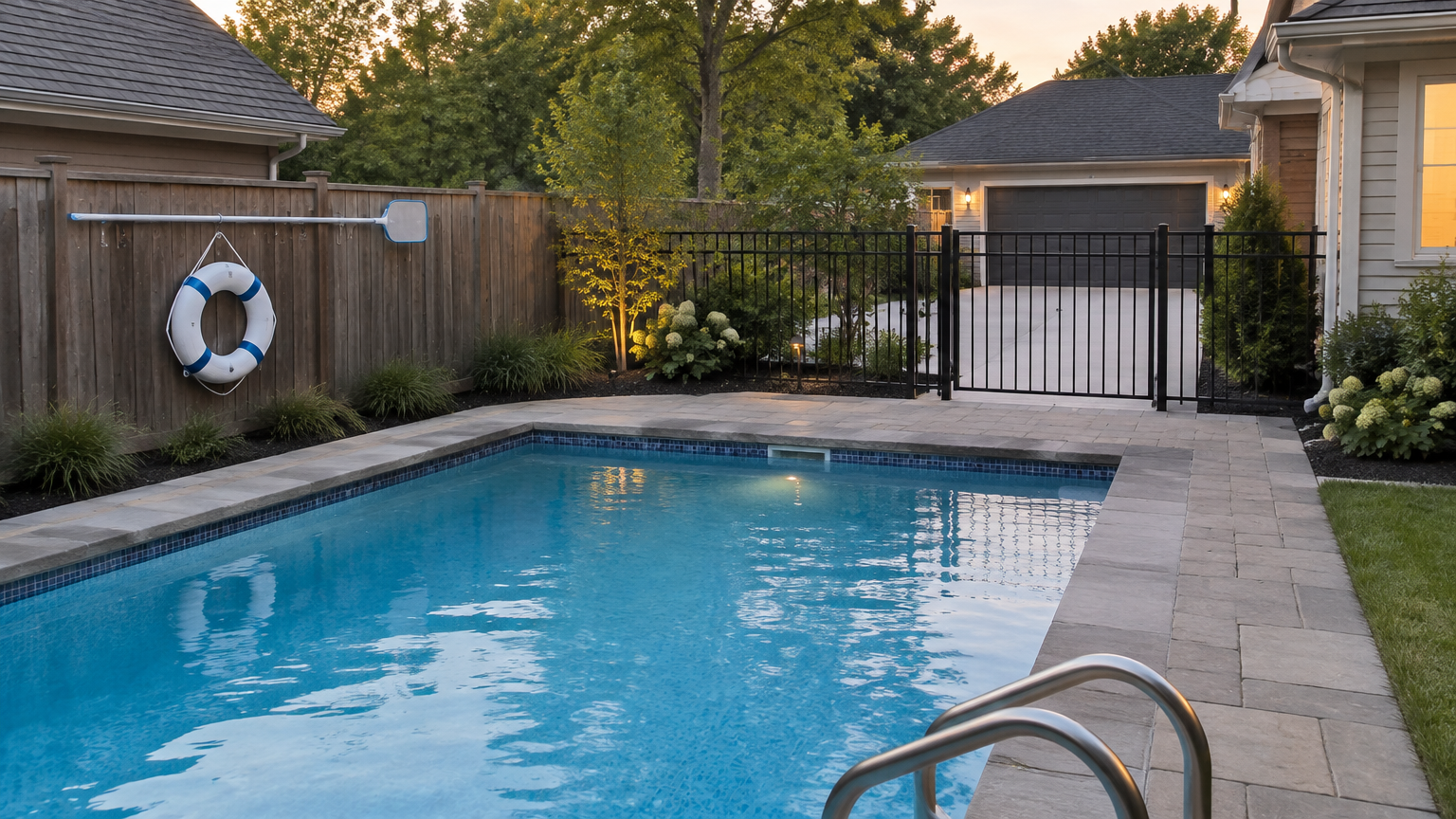
What should private pool rental emergency instructions help guests do?
Private pool rental emergency instructions should act as a short, guest-facing emergency action plan. They should help an unfamiliar renter identify the property, call 911, direct responders to the pool, find available rescue equipment, and make safer decisions while following instructions from emergency dispatchers.
A list of ordinary pool rules is not enough. Rules such as “no running” and “children must be supervised” may reduce risk, but they don't tell guests what to do when someone is injured, a swimmer disappears, or the pool area becomes unsafe.
Write the document for someone who has never visited the property and may be stressed. Use plain language, short directions, and location details that don't depend on the guest understanding your home's layout. A useful plan answers practical questions:
- Where exactly is the pool?
- Which entrance should emergency responders use?
- How does someone open the gate?
- Where is the nearest rescue equipment?
- Who should the guest contact after calling 911?
- Which parts of the pool area should guests avoid?
Keep emergency instructions separate from longer house rules when possible. A renter should be able to find the urgent information quickly, whether the document is posted in the pool area, included with arrival information, or provided as part of the booking instructions.
The American Red Cross home pool safety guidance supports planning for water emergencies, calling for help, supervision, and CPR knowledge. Your document can reflect that guidance without pretending to be a medical manual or an official national template.
Which property and contact details belong at the top of the instructions?
Put the information needed by guests and emergency responders first. The top of the sheet should show the complete property address, pool location, emergency entrance, gate instructions, and a reliable host or designated emergency contact. These details should be checked against the actual site before every booking.
- Complete property address: Include the street address, city, state, and ZIP code. If the property has multiple units, buildings, or a long driveway, explain which part of the address identifies the pool rental. 911.gov advises callers to provide the emergency location and follow the call-taker's directions.
- Pool location on the property: Describe where the pool sits in relation to the driveway, house, garage, fence, or other visible landmarks. For example, “The pool is behind the house through the left-side gate” is more useful than “The pool is in the backyard.”
- Emergency entrance or driveway: Identify the route an ambulance or fire crew should use. Mention a driveway entrance, side gate, alley, or other access point that responders may need. Don't assume a guest will know which entrance is best.
- Gate and access instructions: Explain how the pool gate opens and whether the access method applies to emergency responders. Never leave a critical detail vague, such as “use the usual gate,” especially when renters may be visiting for the first time. Review any access code or lock information for accuracy, and share sensitive details privately rather than placing them in public listing copy.
- Host or designated emergency contact: List the name and phone number of the person who can answer questions about the property. Make clear that this contact does not replace 911. A host should not ask guests to call a personal number first when someone needs immediate emergency help.
Add the location of the nearest phone if one is provided, but don't assume every renter has access to a working device. The CPSC recommends having a phone and rescue equipment near a pool. If your property does not provide those items, avoid making a claim that it does.
How should the instructions describe a drowning or missing-swimmer emergency?
A drowning or missing-swimmer section should be short and action-focused. Tell guests to call 911 immediately, check the pool first when a child is missing, use available rescue equipment only when appropriate, and follow the dispatcher’s directions. CPR should be mentioned only as a trained response, not taught in detail.
- Call 911 immediately: Tell the guest to give the exact property address, explain what happened, and answer the call-taker's questions. The 911.gov calling guidance explains why location information and dispatcher instructions matter.
- Check the pool first if a child is missing: A missing child near water should be treated as an immediate emergency. The CPSC advises checking the pool or spa first because drowning can happen quickly and silently. Your instructions should say this plainly rather than burying it under general safety rules.
- Use rescue equipment only when appropriate: Identify the location of a reaching pole, life ring, or other equipment that is actually available at the property. A guest should not enter the water or attempt a rescue that puts another person at risk. The document can say to use equipment from the pool deck when it is safe to do so.
- Follow the dispatcher’s directions: Tell guests to keep the phone available and follow the emergency call-taker's instructions. Anyone trained in CPR may provide it as directed and within their training. Don't include detailed medical steps that could be outdated, misunderstood, or unsafe when separated from professional guidance.
The wording should avoid suggesting that a rescue tool, written plan, or host phone call guarantees a safe outcome. Emergency instructions are meant to reduce confusion while professional help is being contacted.
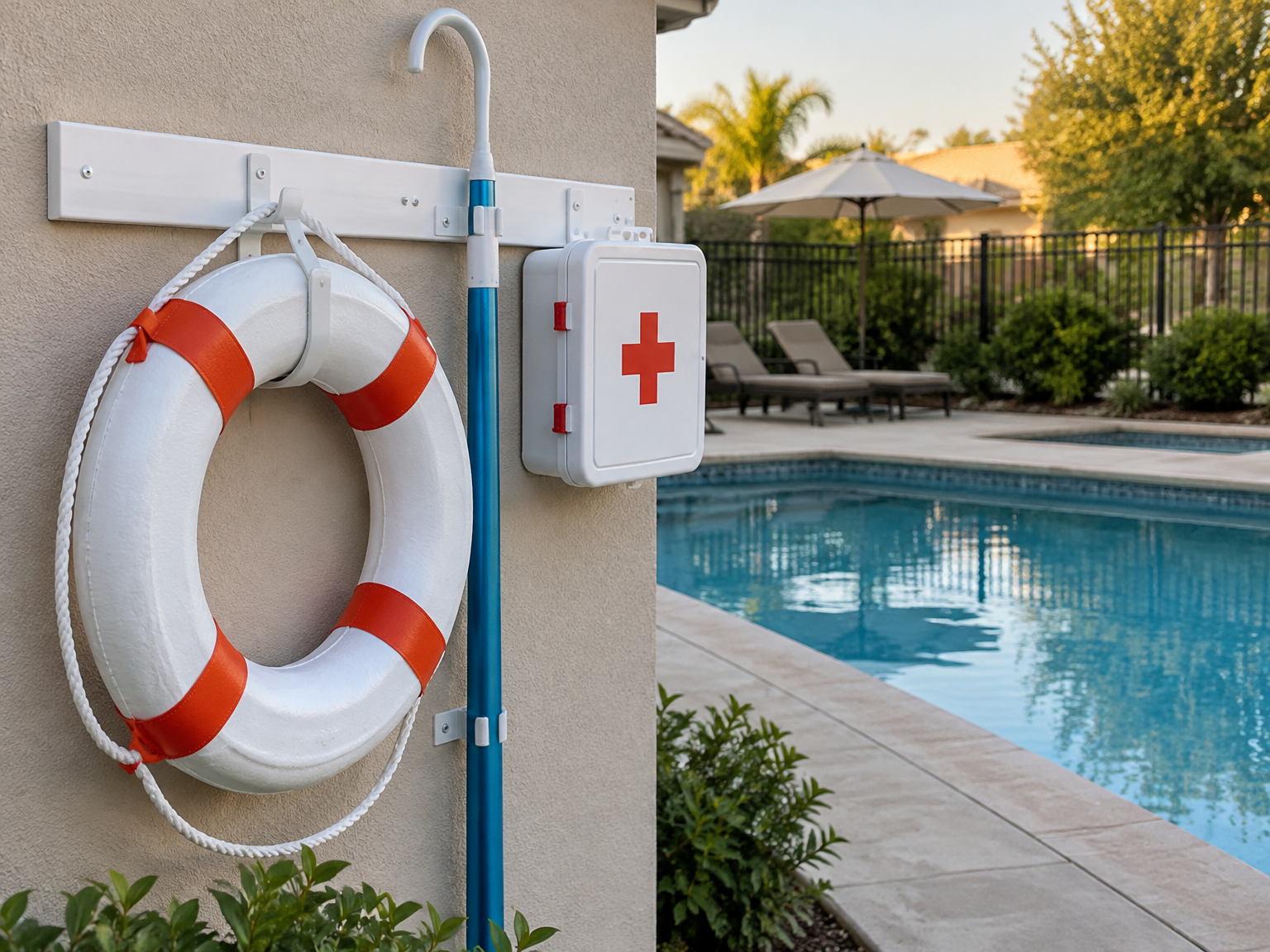
Which other pool emergencies should the written plan address?
A useful plan covers more than drowning. Include separate, simple directions for serious injury, chemical spills or fumes, suspected electrical shock, and severe weather or another unsafe pool condition. Each scenario should tell guests what to avoid, when to clear the area, and when to call 911.
- Serious injury: Tell guests to stop pool activity, keep other people away from the injured person when necessary, and call 911 for a serious injury or medical emergency. The host's contact can be notified after emergency help is requested. Don't encourage guests to move someone unless doing so is necessary to avoid immediate danger.
- Chemical spill, fumes, or exposure: Instruct everyone to leave the affected area and avoid touching, mixing, or cleaning up pool chemicals. If fumes or exposure create a health concern, guests should call 911 and follow the dispatcher’s instructions. The CDC's pool chemical emergency guidance supports planning for evacuation, communication, emergency contacts, and responsibility.
- Suspected electrical shock: Tell guests not to touch a person who may still be in contact with an electrical source. If it can be done without approaching the hazard, power should be turned off, and 911 should be called. The CPSC's electrical safety guidance around pools supports treating suspected electrical shock as an emergency. Renters should never attempt electrical repairs.
- Severe weather or an unsafe pool condition: Tell swimmers to leave the pool during severe weather and stay away from water, damaged equipment, exposed wiring, broken barriers, or areas marked closed. If the pool water, circulation system, chemical system, or surrounding equipment appears unsafe, guests should not swim. The CDC's pool chemical safety guidance also supports keeping swimmers away during unsafe maintenance conditions.
Keep these scenarios visible and distinct. A guest looking for chemical-spill instructions should not have to interpret a general statement such as “use the pool at your own risk.”
Which safety reminders belong alongside the emergency steps?
The best pool rental safety instructions prevent confusion without overwhelming guests with a long rulebook. Remind renters about active supervision, a designated water watcher, sober swimming and supervision, pool barriers, and staying away from unsafe equipment or closed areas.
Place these reminders after the emergency steps or in a clearly labeled safety section:
- Assign a water watcher: One responsible adult should actively watch children and swimmers instead of assuming another adult is paying attention. The designated person should avoid distractions and know where the rescue equipment is located.
- Supervise children closely: Children should not be near or in the pool without appropriate adult supervision. A fence, gate, cover, or alarm can support prevention, but it does not replace an attentive adult.
- Stay sober while swimming or supervising: CDC and Red Cross guidance warns against alcohol use while swimming or supervising. State this directly in a respectful way.
- Respect barriers and closed areas: Guests should not prop open a pool gate, disable an alarm, climb a fence, or enter an area marked unsafe. A pool access barrier is part of the property's safety setup, not an inconvenience to work around.
- Avoid drains, equipment, and maintenance areas: Renters should not handle pumps, chemical containers, electrical equipment, or other pool systems unless the host has specifically arranged for qualified maintenance. Keep swimmers out of the pool if the water or equipment looks hazardous.
These reminders belong in the plan because they explain what guests should do before an emergency starts. They should not imply that renters are responsible for inspecting or repairing the pool.
How can a host check that the instructions will work between bookings?
Review the document as an on-site test, not just a writing exercise. Before a new booking, confirm the address, contact details, access route, gate, rescue equipment, and current pool conditions. Remove outdated directions whenever the property layout, equipment, or responsible contact changes.
- Confirm the address and emergency contacts: Read the address exactly as a guest or 911 call-taker would need it. Check every phone number and replace a contact who is unavailable during the booking period.
- Test the gate and access route: Walk from the expected arrival point to the pool. Make sure the route matches the written directions and that the gate, lock, and emergency entrance work as described. Don't write instructions based on memory alone.
- Confirm rescue equipment and phone locations: Check that listed equipment is actually present, reachable, and stored where the instructions say it is. If a phone is not supplied at the property, don't describe one as available. A missing or damaged life ring should be removed from the document until replaced.
- Review the pool and surrounding hazards: Look for blocked paths, slippery areas, damaged barriers, exposed electrical equipment, chemical containers, or other conditions that should keep guests out of part of the area. Written instructions cannot make an unsafe pool ready for use.
- Remove outdated instructions: Delete old access codes, former contact names, closed-area directions, and references to equipment that has moved. Give renters the current version rather than leaving several conflicting copies around the property.
Local building, health, fire, and pool-safety rules may apply to paid private pool use. Hosts should also check HOA or lease restrictions and insurance terms. No universal national checklist was verified for private pool rentals, and an emergency sheet does not create legal compliance, remove liability, or replace professional advice, training, supervision, or functioning safety equipment.
How should pool hosts connect emergency details with a Parking Mate booking?
Parking Mate hosts control their listing details, availability, pricing, and access rules, so emergency information should be prepared before a renter arrives. Share the confirmed guest with the exact arrival and emergency details needed, while keeping sensitive access information out of public listing copy.
A practical booking routine can include:
- Reviewing the emergency sheet when a booking is accepted.
- Confirming that the listed pool location and arrival route still match the property.
- Checking whether the gate, rescue equipment, and emergency contact have changed.
- Providing renters with current access and safety instructions before the scheduled start time.
- Keeping private codes and other sensitive property details out of public descriptions.
Parking Mate does not inspect, certify, insure, or legally approve pool listings. It also does not provide lifeguards, emergency dispatch, CPR training, rescue equipment, or on-site emergency response. The host remains responsible for checking the property, understanding local rules, and deciding whether the space is appropriate to offer.
Hosts who are preparing a pool listing can list a pool space on Parking Mate, while renters can browse private pool listings. For setup ideas, review this guide on how to prepare a private pool area for booked guests. A clear emergency plan supports the booking experience, but it works only alongside safe property conditions, responsible supervision, and a prompt call to emergency services when needed.
Related reading
Frequently asked questions
What should be at the top of private pool rental emergency instructions?
Place the complete property address, pool location, emergency entrance, gate or access directions, and the host or designated emergency contact at the top.
What should guests do if someone is drowning in a private rental pool?
Guests should call 911 immediately, check the pool first if a child is missing, use available rescue equipment only when appropriate, and follow the dispatcher’s instructions.
Should pool rental instructions include chemical and electrical emergencies?
Yes. Explain how to clear the area, call 911 when needed, avoid contact with electrical hazards, and keep swimmers away from water or equipment that appears unsafe.
Do written pool emergency instructions make a rental legally compliant?
No. A written plan does not guarantee safety or replace local rules, insurance advice, training, supervision, functioning barriers, or emergency services.
How often should a host update pool emergency instructions?
Review them before each booking and whenever the address details, access route, gate, emergency contact, rescue equipment, or pool condition changes.