
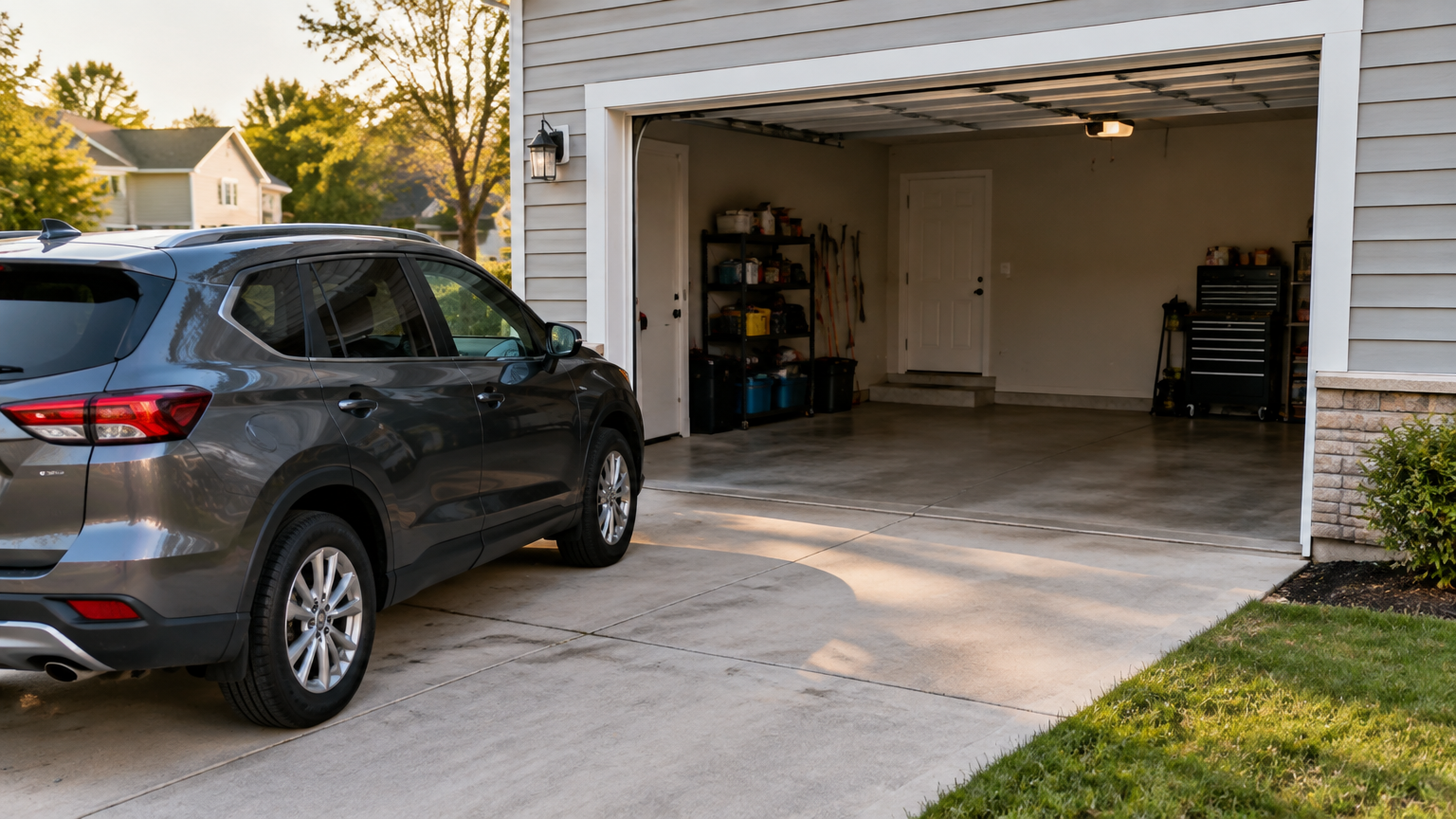
What should you confirm before booking a private garage parking space?
A garage photo is only a starting point. Before you book, confirm five practical details: when you can access the vehicle, how entry works, whether your vehicle fits, what use is allowed, and what the host expects when you arrive. The word “private” does not automatically answer any of these questions.
- Access timing: Ask whether you can enter and retrieve the vehicle during the exact hours you need. Overnight, early-morning, weekend, or frequent access may be limited.
- Entry method: Find out whether you’ll use a key, remote, keypad, gate control, parking pass, or another method. Ask who provides it and what happens if it stops working.
- Vehicle fit: Compare your vehicle’s measurements with the garage-door opening, entrance, turning area, and usable space inside.
- Permitted use: Confirm whether the booking covers parking only or also allows storage, overnight stays, belongings, charging, or other activities.
- Arrival expectations: Ask where to approach, where to park, how to close the garage, and whom to contact if the space is blocked.
You can start by browsing private parking spaces and reading each listing carefully. If a key detail is missing, message the host before paying rather than relying on a photo or assumption.
When can you enter and retrieve your vehicle?
Access hours determine whether the space works in real life. Confirm the exact window for parking and retrieval, whether overnight entry is allowed, how access is provided, whether the route is shared, and what to do if a key, remote, code, or gate does not work.
- What are the exact access hours? A listing may be available for a monthly booking while still having limited entry times. Ask about weekdays, weekends, holidays, overnight access, and early-morning retrieval.
- Is after-hours access allowed? If you work late, travel early, or need the vehicle at unpredictable times, ask whether you may enter without advance notice. Do not assume that an enclosed garage offers 24-hour access.
- Is the entrance private or shared? The garage itself may be private while the driveway, gate, alley, or access path is shared with the host or another vehicle. Ask whether another person could block the route or need to move a car.
- What happens if access fails? Confirm who controls the key, remote, keypad, or gate and who to contact if the device is missing or fails. Ask whether the host needs notice before each visit and how an urgent access problem should be reported.
Write down the answer if the access arrangement is complicated. A short message such as, “Can I enter at 5 a.m. without advance notice, and how will I receive the remote?” is clearer than a general question about availability.
How can you make sure your vehicle will fit?
Vehicle fit depends on more than the garage’s interior size. Compare your vehicle’s height, width, length, mirrors, roof racks, and other additions with the garage-door opening, entrance width, turning approach, and usable space around the parked vehicle. Request measurements when the listing does not provide them.
Start with your vehicle’s actual dimensions, including roof racks, antennas, side mirrors, running boards, or other equipment that changes its size. Then ask the host for the usable entrance height and width, not just the general dimensions of the garage.
The door opening may be smaller than the interior. A vehicle can fit comfortably once parked but still fail to clear the door, a low track, a sloped driveway, or a narrow point near the entrance. Turning space matters too, especially when the approach is short, angled, or shared with another car.
Ask questions such as:
- What is the garage door’s clear height?
- How wide is the opening at its narrowest point?
- Is the driveway level, sloped, or difficult to turn into?
- Are there posts, shelves, walls, or stored items beside the parking area?
- Will another vehicle or object reduce the available space?
- Can I send you my vehicle’s height, width, and length for confirmation?
If you drive a tall SUV, van, truck, motorcycle with accessories, or a vehicle with a roof box, be especially careful. A listing photo may not show the lowest ceiling point or the tightest part of the entrance. Keep the host’s response in writing so both sides have the same understanding before booking.
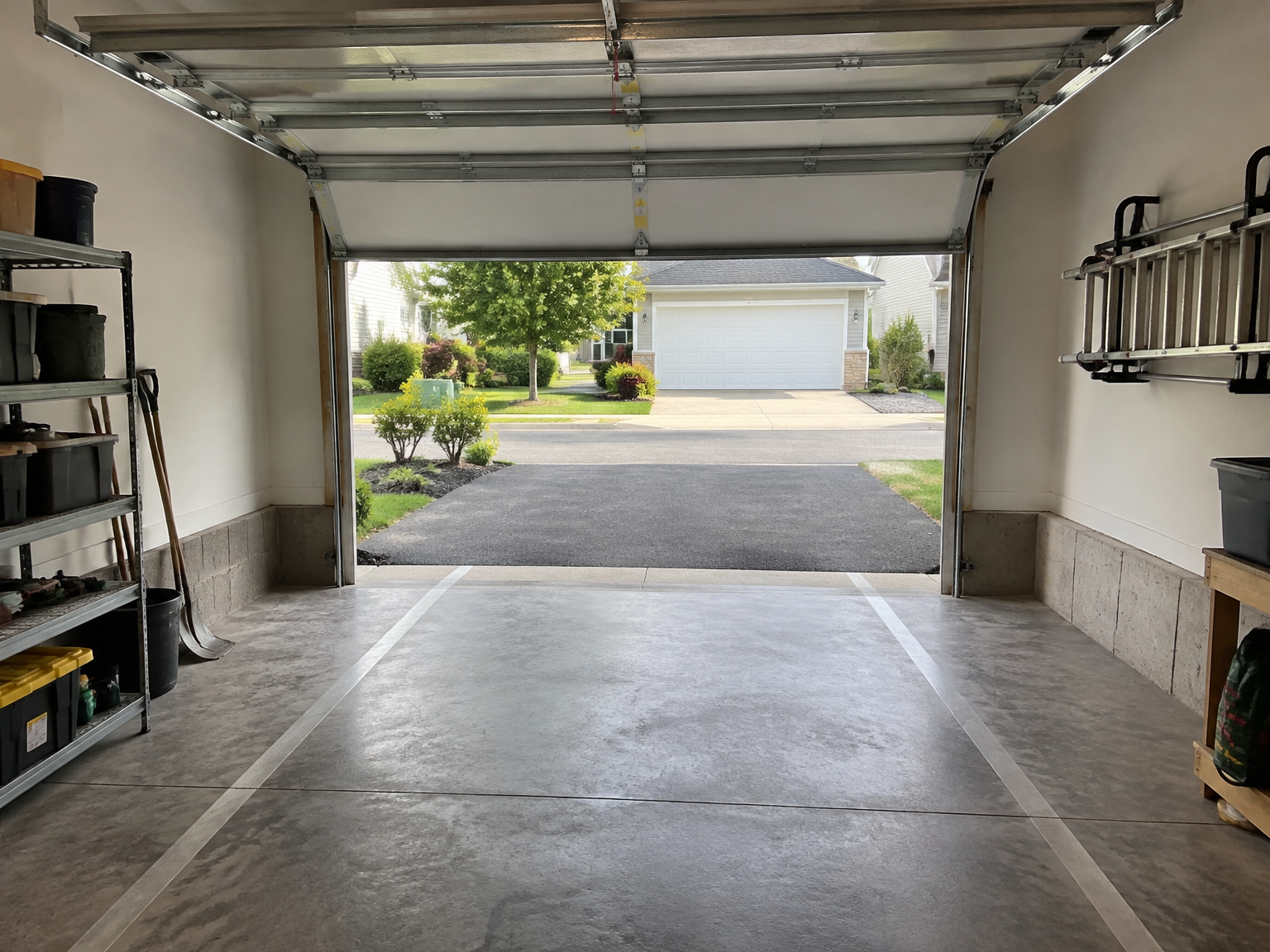
What parking, storage, or vehicle activities are allowed?
A private garage may be offered for parking only. Ask whether you may leave belongings in the vehicle or garage, perform maintenance, charge an electric vehicle, wash the car, idle the engine, or store a special vehicle. Enclosed space alone does not grant permission for these activities.
- Is this parking only or vehicle storage? A short parking booking may not include long-term storage, and a storage arrangement may have different access expectations. Confirm the intended use and booking period.
- May belongings remain in the vehicle or garage? Ask about luggage, boxes, tools, equipment, spare parts, and other personal property. Also ask whether flammable materials or household goods are prohibited.
- Are repairs or other activities allowed? Confirm the rules for tools, washing, idling, fluid changes, maintenance, loading, and unloading. A host may allow parking while prohibiting work that creates noise, spills, odors, or property damage.
- Do special vehicles or equipment need approval? Ask about electric vehicles, motorcycles, trailers, commercial vehicles, unregistered vehicles, or vehicles that need a charger or extra space. Charging should never be assumed unless the host specifically permits it.
The same questions apply if you need a garage for an overnight stay, a monthly booking, or frequent access. The longer the vehicle remains there, the more important it becomes to clarify who may enter the space, what you may leave behind, and whether planned maintenance or property rules could interrupt access.
If the booking is really for storage rather than ordinary parking, review the listing carefully and consider whether a storage space is a better match. Do not treat a garage labeled “private” as a promise of climate control, monitoring, security protection, or storage permission.
What arrival and parking instructions should the host provide?
Good arrival instructions tell you where to approach, how to enter, where to position the vehicle, how to leave the garage, and who to contact if something is wrong. Ask for these details in writing, especially when the property has a shared driveway, gate, alley, or narrow entrance.
The host should explain the practical sequence from the street to the parking space. Useful instructions may include:
- Which driveway, gate, or entrance to use
- Where to stop if the garage is closed
- How to receive and use a key, remote, code, or parking pass
- Whether the garage door should be closed after entry
- Where inside the garage the vehicle should be positioned
- Whether keys must remain with you or be left in a specific place
- Who to contact if another vehicle occupies the space
- What to do if the access device is lost or the garage cannot be opened
Ask whether the host needs your vehicle description, booking confirmation, or arrival time. Some properties may have multiple garages or parking areas, so a clear location matters. If the space is behind a gate or down a shared driveway, ask whether someone else could close the gate or block the route.
A written message can prevent confusion: “Please send the exact arrival steps, including where I should park temporarily, how I open the garage, and what I should do when I leave.” Save the confirmed instructions and follow them instead of improvising at arrival.
Parking Mate renters review a listing, book dates, pay through Stripe, and follow the host’s arrival and parking instructions. You can also search current parking listings and compare the details provided before selecting a space.
Which booking, property, and insurance terms deserve a final check?
Before confirming, review the booking dates, access period, cancellation and change rules, total price, property restrictions, and responsibility for damage or loss. Check the final amount shown on Parking Mate, including the 10% renter service fee, and do not assume an enclosed garage provides insurance coverage.
- Do the dates and access period match your plan? Confirm the first and last day, the times you may enter, and whether recurring or monthly access works as expected. Ask what happens if your vehicle stays longer than planned.
- What are the cancellation and change terms? Review the listing and booking conditions before paying. Ask how to handle a changed arrival date, a different vehicle, an extended stay, or a space that becomes unavailable.
- What is the total shown before confirmation? Hosts set their own hourly or monthly rates. Parking Mate displays fees before confirmation, so review the booking subtotal, renter service fee, and final amount on the checkout screen. You can review Parking Mate’s pricing and fees for the published fee information.
- What property and insurance rules apply? Ask whether an HOA, condo association, landlord, lease, or property manager limits outside parking or long-term storage. Check your own auto, renters, or personal liability policy rather than assuming the host’s policy covers your vehicle or belongings.
Insurance questions deserve extra care. The National Association of Insurance Commissioners advises consumers to review policy limits and exclusions because a standard homeowners or renters policy may not cover every vehicle, personal item, business use, or liability situation. Read the NAIC guidance on homeowners insurance and ask your insurer what applies while the vehicle is parked in a privately rented garage.
Also ask the host how to report damage, access problems, or concerns about belongings. Parking Mate is a marketplace and is not an insurer, lawyer, or source of automatic legal approval for a property arrangement. Local rules and property permissions vary, so do not assume that a host’s listing overrides a lease, HOA rule, condo rule, or other restriction.
What should you do if an important question remains unanswered?
Pause the booking when vehicle fit, access, permitted use, arrival instructions, or responsibility for damage remains unclear. Message the host in writing, review the listing again, and book only after the answer matches your needs. A low-friction booking is not worth arriving at a space that cannot serve your vehicle.
A useful message can include the information the host needs to give a specific answer:
> My vehicle is approximately [height] high, [width] wide, and [length] long. I need access from [time] to [time]. Can you confirm the clear door opening, entry method, parking instructions, and whether I may [specific use]?
If the host confirms the details, compare the response with the listing and save the conversation. If the answer changes, is vague, or never arrives, keep looking. Do not send payment outside the Parking Mate booking workflow or treat an informal promise as a substitute for clear booking terms.
Once the important questions are answered, the process is straightforward: review the listing, confirm the missing details, select the dates, book and pay through Stripe, and follow the host’s confirmed arrival instructions. The goal is not to interrogate the host. It is to make sure the space, access arrangement, and permitted use match what you actually need.
Related reading
Frequently asked questions
What should I ask before booking a private garage parking space?
Ask about access hours, the entry method, vehicle clearance, permitted use, storage restrictions, arrival instructions, booking terms, and how damage or insurance concerns are handled.
How do I know if my car will fit in a private garage?
Compare your vehicle's height, width, length, mirrors, and roof racks with the garage door opening, entrance width, turning approach, and usable interior space. Request measurements if the listing does not provide them.
Does private garage parking automatically include storage or repairs?
No. A garage booking may be for parking only. Ask whether belongings, repairs, tools, charging, washing, idling, or fluid changes are allowed, and rely on the host's written rules.
What should I do if the host has not confirmed an important detail?
Pause the booking and message the host in writing. Do not assume that access is available around the clock, that the garage fits your vehicle, or that storage and other activities are permitted.