
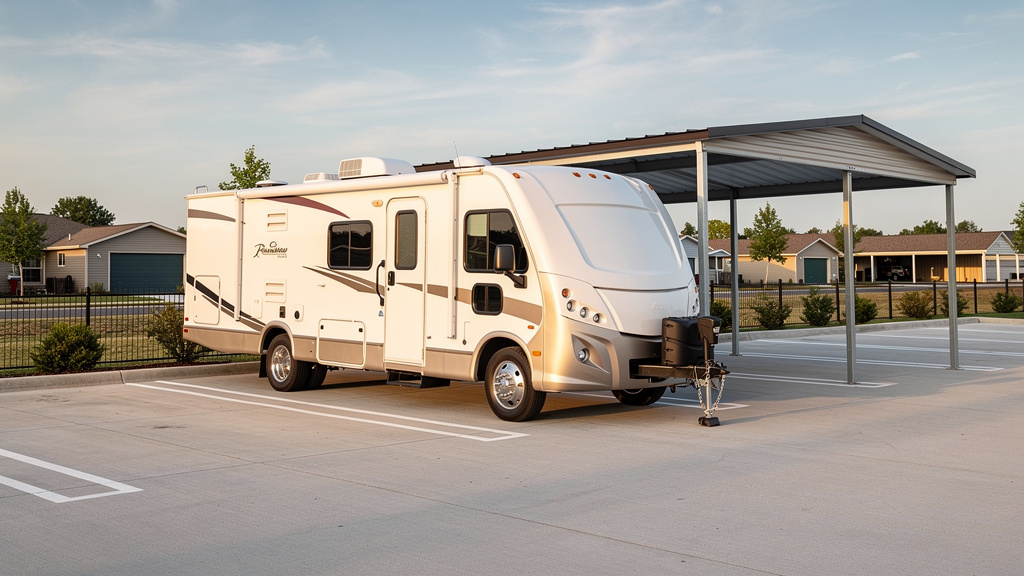
What should an RV storage booking clarify before you pay?
An RV storage booking should explain more than where the vehicle will sit. Get clear answers about access, dimensions, movement rights, weather exposure, contact procedures, included services, fees, insurance, and written terms. Treat the word “storage” as a starting point, not proof that every useful feature is included.
A convenient location may still be a poor choice if you cannot retrieve the RV when you need it. Likewise, a low advertised price may cover only an uncovered spot, with no electricity, washing, dumping, or assistance included.
Before you pay, compare the listing with your actual routine. Someone storing a motorhome for the winter may need different terms from someone who takes a travel trailer out every weekend. You can browse available storage spaces and use the listing details as a starting point for questions.
What access questions should you ask before storing your RV?
Access rules determine whether the space works in real life. Ask about the gate or driveway schedule, weekend and holiday entry, credentials, appointments, after-hours procedures, retrieval notice, and host availability. A storage space is only useful when you can reach your RV at the times your plans require.
- What are the regular entry and exit hours? Ask whether access follows fixed hours, host availability, or a separate gate schedule. Do not assume that a listing with monthly availability offers access at any time of day.
- Can I enter on weekends and holidays? If you usually travel on weekends, confirm that those days are covered. Ask whether holiday access changes and whether the host needs advance notice.
- Do I need a key, code, remote, or appointment? Find out how entry works and whether credentials are provided for the full booking. If an appointment is required, ask how far ahead you need to schedule it.
- What happens if I need access after the stated hours? A host may have a separate after-hours process, or there may be no late access at all. Get the answer before booking rather than relying on an informal promise.
- How much notice is required to retrieve or return the RV? Some spaces may allow drop-in access, while others may require the host to unlock a gate or clear a driveway. Ask about both removal and return.
- Who helps if the gate, lock, or access instructions fail? Confirm the preferred contact method and what happens if the host is unavailable. Save the instructions with your booking information so you are not searching for them at the last minute.
Access questions matter even more for a large RV because arriving and leaving may take planning. Ask whether you can enter with a tow vehicle, whether there is enough room to line up safely, and whether another vehicle could block the route.
Will the space fit your RV, and who can move it?
Fit depends on more than the advertised length of a space. Check the RV’s full dimensions, roof equipment, hitch, slide-outs, mirrors, turning path, and drive-aisle clearance. Also ask who controls movement. Never assume you may freely remove or return the RV unless the host confirms it.
- What are the usable length, width, and height limits? Use your vehicle’s actual measurements, including mirrors, ladders, awnings, spare tires, and other equipment. A small measurement difference can make entry difficult even when the listed length appears sufficient.
- Is there clearance for roof equipment, slide-outs, and the hitch? Covered or indoor spaces may have overhead limits. Ask whether slide-outs may remain extended and whether the hitch or tongue can project beyond the marked area.
- Can my RV turn into the space without crossing obstacles? Ask about the driveway, turning area, gate width, trees, walls, poles, parked vehicles, and the width of the route. Photos may not show the full approach.
- Who may move the RV, and when? Confirm whether only you may move it or whether the host, a contractor, or another site operator can reposition it. Ask how much notice you would receive and who accepts responsibility for access-related damage.
Bring the exact measurements of a fifth wheel, motorhome, boat trailer, or travel trailer rather than estimating from the model name. If the listing does not provide dimensions, ask the host to measure the usable space and route. Written confirmation is better than a casual verbal guess.
You may also want to ask whether leveling, unhitching, or disconnecting equipment is expected. Those details can affect how much room you need and whether you can handle the arrival without assistance.
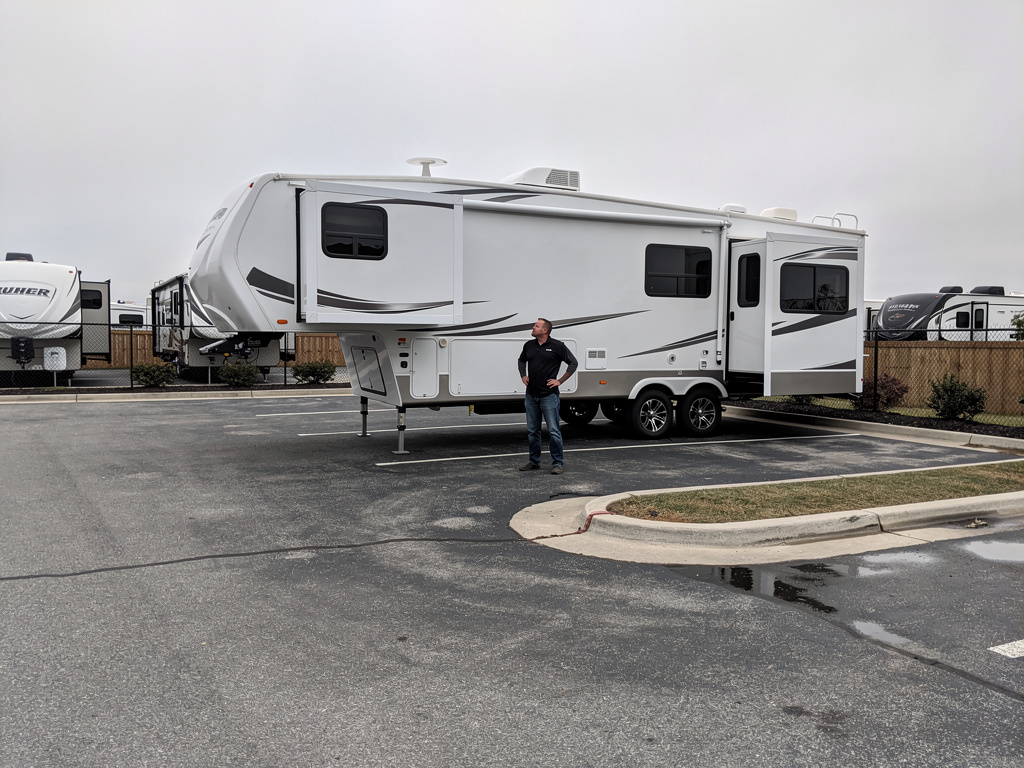
What weather protection does the storage space actually provide?
Outdoor, covered, and indoor storage expose an RV to different conditions, so compare the physical setting rather than relying on a label. Ask about sun, rain, hail, snow, wind, freezing temperatures, drainage, and standing water. A roof reduces some exposure but does not answer every weather question.
| Storage type | Protection to ask about | Questions to clarify |
|---|---|---|
| Outdoor | Direct sun, rain, hail, snow, wind, and ground conditions | Is the space paved or gravel? Does water collect after storms? Is the RV near trees or exposed to strong wind? |
| Covered | A roof may reduce direct sun and precipitation, but sides may remain open | How much of the RV is protected? Can wind-driven rain, snow, or hail still reach the vehicle? What is the overhead clearance? |
| Indoor or enclosed | Greater separation from outdoor conditions, depending on the building | Is the building fully enclosed? How are entry dimensions, ventilation, drainage, and maneuvering handled? |
The site surface matters as much as the roof. Ask whether the space drains well, whether standing water has been a problem, and whether the RV sits on pavement, gravel, dirt, or another surface. A covered space can still have exposure from open sides or poor drainage.
If you plan to store the RV through winter, ask specifically about freezing conditions and whether the host has rules for preparing the vehicle. Do not assume the host provides winterization, battery care, inspections, or weather checks unless those services are clearly stated.
For a broader comparison, you can compare lot listings, but remember that each listing controls its own description, availability, and rules.
What should the RV storage price and booking include?
The price should be tied to clearly stated space and service details. Confirm whether you are paying for a reserved spot only or also receiving power, water, washing, dumping, repairs, inspections, towing, or other help. Ask for every expected charge before you confirm the reservation.
- What exactly is the reserved space? Confirm whether the booking covers one marked area, a driveway section, an indoor bay, or another defined location. Ask whether the tow vehicle may remain there or must be parked elsewhere.
- Are electricity or water included? A power outlet or water connection may be available, prohibited, separately metered, or unavailable. Ask about connection rules, limits, and any additional charge.
- Are dumping, washing, or loading services available? These services are not automatic parts of RV storage. Ask whether they are allowed, included, separately priced, or prohibited at the property.
- Does anyone inspect, repair, or move the RV? Storage usually does not mean maintenance. Clarify whether the host checks the vehicle, handles repairs, arranges towing, or leaves all care to you.
- Are there deposits, extra access charges, or cancellation costs? Review the total shown at checkout and ask about charges connected to late retrieval, changes, damage, or special access. On Parking Mate, the renter service fee is 10% of the booking subtotal, and fees are shown before confirmation. You can review the published details on the Parking Mate fees page.
Keep the listing, host answers, and final booking details together. If a service matters to you, ask for it in writing instead of treating a photograph or general description as confirmation.
Who do you contact if access, damage, or site conditions change?
A clear contact plan matters when the gate will not open, the space is blocked, damage appears, or the site looks different from the listing. Confirm how to reach the host, how urgent problems are handled, and how changes will be communicated. Keep important answers in the booking conversation or written terms.
- What is the preferred way to contact the host? Ask whether messages, phone calls, or another method should be used for routine questions. Use the method the host actually monitors.
- Is there an urgent or emergency contact process? Find out whom to contact if you need immediate access, discover damage, or face a failed lock. Do not assume routine messaging is monitored around the clock.
- How should I report damage, water, gate failure, or unsafe conditions? Ask what details and photos the host needs and whether you should avoid moving the RV until the issue is documented.
- How will I learn about relocation or changed access rules? A host may need to change the route, move vehicles, or adjust availability. Ask how much notice you will receive and what happens if the change prevents access.
Take photos of the RV and the storage area at arrival when practical. Record existing damage, tight clearances, and any instructions that affect how you park. Good documentation can make a later conversation more precise, although it does not replace insurance or a formal agreement.
What insurance and written terms should you review before booking?
Read the booking terms for access limits, cancellation, move-out notice, relocation, unpaid balances, liability, and damage. Then ask your insurer what coverage applies while the RV is stored. Parking Mate is not an insurer, lawyer, or source of legal approval, and insurance responsibilities depend on the policies and terms involved.
Coverage for the RV itself may differ from coverage for personal belongings inside it. Ask your insurer whether comprehensive coverage applies while the vehicle is stored and whether theft, vandalism, fire, weather damage, deductibles, exclusions, and storage-address rules affect your policy.
Do not assume a homeowners or renters policy covers the RV itself. Progressive explains that RV coverage depends on the policy, while belongings inside the vehicle may be treated differently. GEICO also notes that coverage can vary by covered events, deductibles, limits, and storage circumstances.
The host may require proof of insurance or include liability language in the booking terms. A sample Utah National Guard storage agreement includes provisions about access, relocation, insurance, and indemnification, but it is an example of one agreement, not a nationwide rule. Local property rules, leases, HOA rules, and contracts can vary.
If a term is unclear, ask the host to explain the practical expectation and consult the appropriate professional for legal or insurance advice. Do not rely on a listing title to settle questions about responsibility for theft, weather, damage, or abandoned property.
How can Parking Mate renters confirm the details before reserving RV storage?
Parking Mate renters can compare listings, review photos and stated availability, and ask the host to confirm the details that matter for their RV. Check access, movement, dimensions, weather exposure, services, and total fees against your routine. The best booking is the one whose terms match how you actually use the vehicle.
Start with the vehicle, not just the location. Write down its length, width, height, hitch setup, slide-out position, and any equipment that affects clearance. Then decide how often you need access and whether outdoor, covered, or indoor protection fits your plans.
When reviewing a Parking Mate listing, ask the host:
- What are the exact access hours and entry instructions?
- Can I retrieve and return the RV without an appointment?
- Who may move the vehicle?
- What is the usable clearance and turning space?
- What weather and drainage conditions should I expect?
- Is the price for the space only?
- Are power, water, washing, dumping, inspections, or repairs included?
- Who should I contact if access or site conditions change?
Parking Mate hosts set their own prices and availability, so details can differ from one listing to another. The platform connects renters with available spaces, but it does not make every storage listing RV-specific or guarantee power, covered storage, 24-hour access, maintenance, towing, or inspections.
Review the answers before paying, and save any important clarification in writing. You can search Parking Mate listings and compare the stated rules with your travel schedule, retrieval needs, and vehicle measurements. If a key answer remains vague, keep looking for a listing with terms you can understand and use confidently.
Related reading
Frequently asked questions
What should I ask before booking RV storage?
Ask about access hours, weekend and holiday entry, vehicle dimensions, clearance, movement rights, weather exposure, included services, extra fees, emergency contact procedures, insurance, and cancellation or move-out terms.
Can I assume RV storage includes electricity or maintenance?
No. Confirm whether the booking includes only a storage space or also provides electricity, water, dumping, washing, repairs, inspections, towing, or other services.
What should I ask about outdoor RV storage?
Ask how the site handles sun, rain, hail, snow, wind, freezing conditions, drainage, and standing water. Outdoor, covered, and indoor storage provide different levels of physical protection.
Does Parking Mate insure my RV while it is stored?
No. Parking Mate is not an insurer. Review your RV policy and ask your insurer what coverage applies while the vehicle is stored, including coverage for belongings inside the RV.
How can I confirm RV storage details on Parking Mate?
Review the listing, dates, photos, stated rules, and price, then ask the host to clarify access, movement, dimensions, weather protection, and included services before paying.