
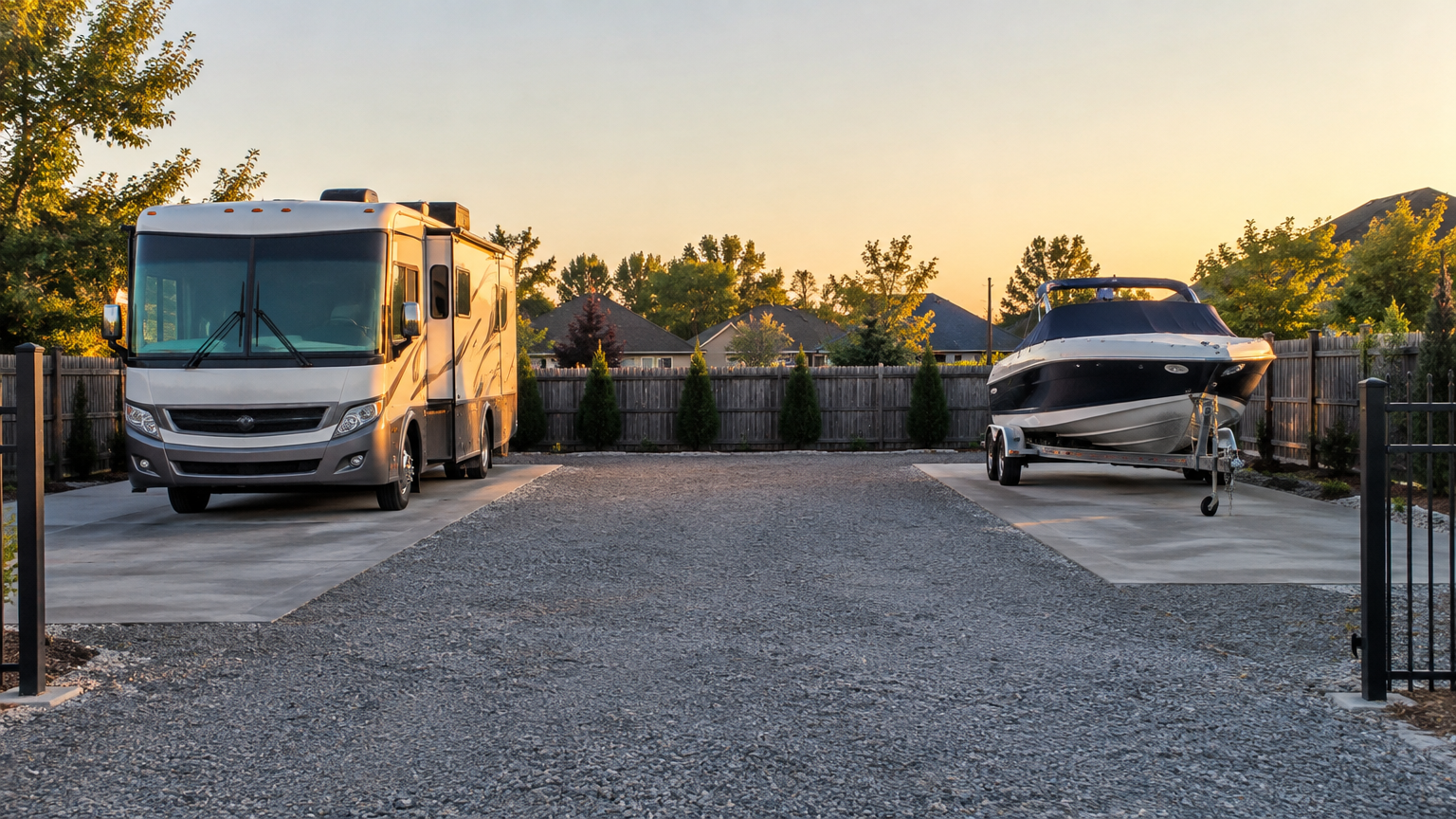
What does RV, boat, lot, and outdoor space booking include?
RV, boat, lot, and outdoor space booking covers the short-term or longer-term use of a driveway, side yard, open lot, or similar area for an RV, boat trailer, trailer, or large vehicle. A suitable booking must fit the vehicle, provide a workable access route, and match the host’s rules and available dates.
The right space is more than an empty rectangle. A renter may need room for the hitch, trailer tongue, outboard motor, rear ladder, spare tires, or tow vehicle. A host may need to explain whether the space is for travel-mode storage only or whether the renter may open slide-outs, lower steps, use an awning, or access the vehicle during the booking.
A private driveway or side yard may work for some smaller or medium-sized units, while an open RV storage lot may be better for a longer rig that needs a wider approach. You can browse outdoor lots for RVs and trailers or compare other outdoor storage spaces, but the listing details still need to be checked carefully.
What should you measure before booking space for an RV or boat?
The vehicle and the space should be measured as they will actually be used. Six measurements matter most: total length, width, height, hitch or trailer tongue, rear equipment, and the tow-vehicle setup. A model name or living-area length does not tell you the full footprint.
- Measure total length. For a travel trailer, include the hitch coupler through the rear-most part of the trailer. For a motorhome, measure from the front bumper to the back of the unit. A fifth wheel may need a different measurement approach, so check the manufacturer’s specifications and confirm the real end-to-end length.
- Measure the widest point. Include mirrors when they remain extended, fenders, slide-out housings, side equipment, and other parts that may affect the route into the space. RVIA publishes general dimension guidance, but its figures are not a universal size rule for every RV.
- Measure travel height. Include rooftop air conditioners, vents, satellite equipment, antennas, rails, and other fixed items. A low tree branch or gate header can make an otherwise long and wide space unusable.
- Measure the hitch, tongue, or front projection. A boat trailer’s tongue adds length beyond the boat itself. The same is true for many utility and travel trailers. Record the full length from the towing connection to the farthest rear point.
- Measure rear equipment and overhang. Outboard motors, swim platforms, spare tires, ladders, bike racks, and other equipment can change both length and width. A boat that fits on paper may not fit once the motor and trailer are included.
- Account for the tow vehicle. Decide whether the tow vehicle stays with the trailer, needs to enter only for drop-off, or must return later for retrieval. Its length and turning path may require more room than the storage spot itself.
For reference, RVIA’s dimension information notes that some RVs have been built up to 45 feet long and 8.5 feet wide in travel mode. That information shows why measuring the complete rig matters. It does not mean every RV needs those dimensions or that a space matching them will automatically be accessible.
Write down the measurements and compare them with the listing. If the host provides only an approximate width or says “fits most RVs,” ask for the usable dimensions before booking.
Can the RV or boat trailer actually reach the outdoor space?
A large vehicle needs a workable route from the public street to the storage spot. The parking area and the maneuvering area are not the same thing. A listing may have enough length for the trailer but still fail because the entrance is narrow, the turn is too tight, or there is nowhere to straighten the vehicle.
- Check the entrance or gate width. Measure the narrowest opening, not just the fence section or driveway at its widest point. Account for gate hinges, posts, curbs, parked cars, landscaping, and mirrors.
- Study the street approach. Look at the direction from which the vehicle will arrive, the width of the road, nearby parked vehicles, traffic, and whether the rig can line up with the entrance. A difficult approach may be more important than the size of the space.
- Trace every corner. Identify turns between the street, driveway, side yard, and final position. BoatUS explains that trailer backing can involve straight-line backing, tight corners, and obstacles, so renters should not assume a trailer will move like a passenger car.
- Check slope and grade changes. A steep driveway, sharp dip, raised curb, or uneven transition can affect traction and clearance. The tow vehicle may lose useful pushing or braking control on a surface that looks manageable from a photo.
- Look above the route. Check branches, wires, roof overhangs, signs, and gate headers. Measure the lowest point along the entire route, not only above the final parking position.
Photos from the street, entrance, side, and storage position can reveal obstacles that a single overhead image misses. Renters should ask how the host expects the vehicle to enter and leave, especially if the booking requires backing through a narrow passage.
Hosts should describe whether renters may arrive independently or need a scheduled handoff. A space that is physically accessible but blocked by another vehicle during retrieval may not meet the renter’s needs.
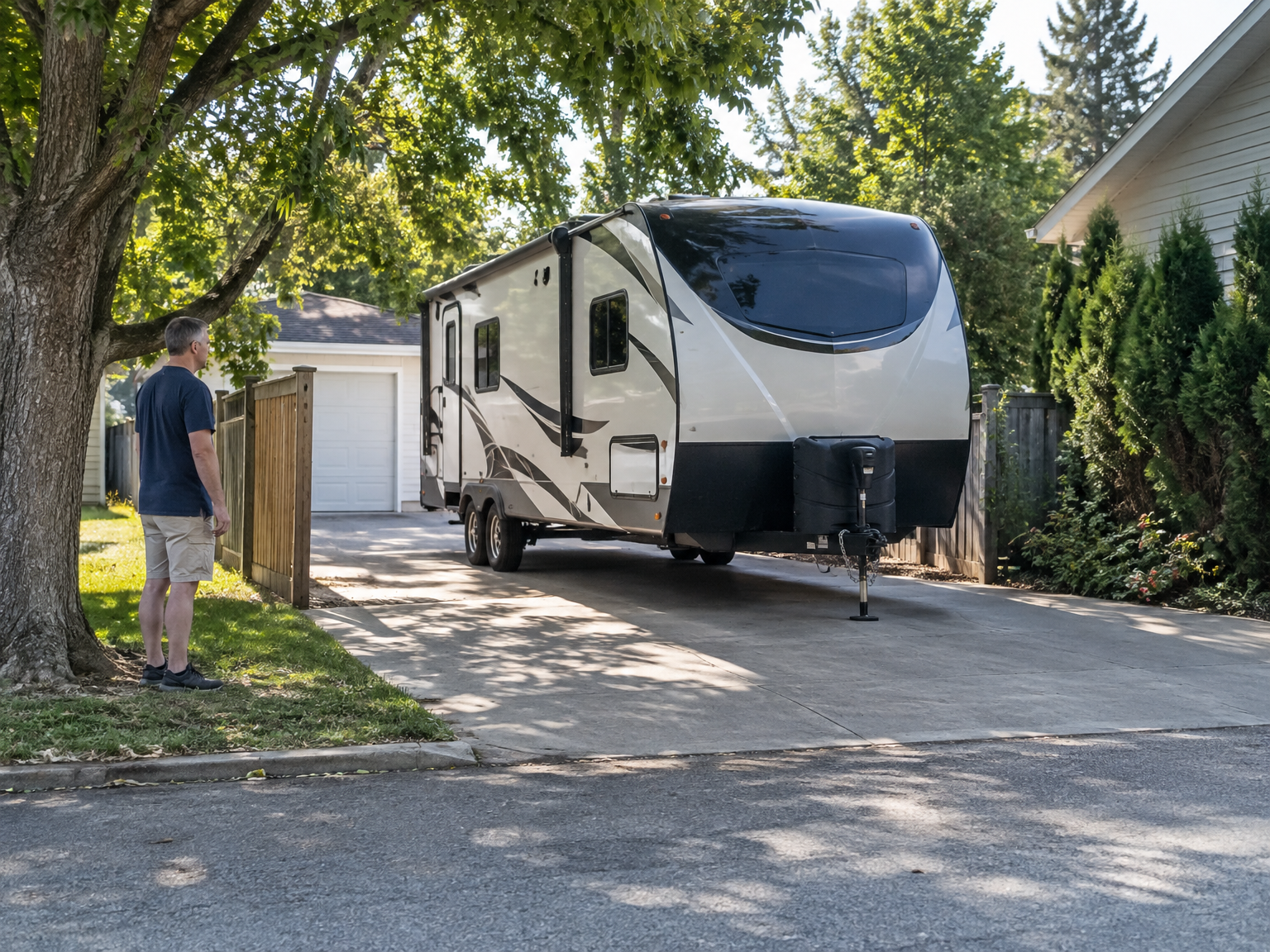
How do surface, drainage, clearance, and setup conditions affect storage?
Surface and site conditions affect whether an outdoor space is practical for a particular vehicle. Concrete and asphalt may provide a firm base, while gravel, soil, or grass can vary in traction, drainage, and resistance to ruts. No surface is automatically suitable for every RV, boat, or trailer.
A firm surface is useful for heavy equipment, but its condition still matters. Cracked pavement, soft edges, loose gravel, standing water, and exposed irrigation covers can create problems during arrival or over a long booking. Grass or soil may become soft after rain, while gravel can shift under tires if it is poorly compacted.
Drainage and slope deserve a close look. Water that collects around tires or beneath a trailer can affect the storage area and make retrieval harder. A level site may be more practical for setup, but renters should not assume that every outdoor storage booking is designed for occupancy or camping. Storage and overnight use are different questions.
Clearance also includes the room needed beside the vehicle. A renter may need space to walk around, inspect a trailer, connect a tow vehicle, or open a door. THOR Industries advises retracting awnings and bringing in slide-outs when preparing an RV for storage or travel. Hosts should state whether the booking allows anything beyond travel-mode storage.
Ask about:
- Low branches and roof edges
- Standing water after rain
- Soft shoulders or muddy areas
- Drainage toward neighboring property
- Whether wheel chocks or leveling equipment are allowed
- Whether washing, repairs, dumping, electrical hookups, or boat launching are prohibited
These details are especially important for monthly RV storage or seasonal boat trailer storage, when the vehicle may remain in place through changing weather.
Which booking duration and outdoor space type fit your situation?
The best booking length depends on how often you need access and how long the vehicle will stay. Hourly or short-term availability may fit a move, event, trip, or brief gap between storage locations. Monthly availability can make more sense for seasonal boat storage or a vehicle that will sit unused for an extended period.
| Booking approach | Best fit | Planning considerations | Parking Mate availability |
|---|---|---|---|
| Hourly or short-term | A brief stop, event, move, loading period, or temporary storage need | Confirm arrival and removal times, access instructions, and whether the vehicle may remain overnight | Available when a host offers the needed dates and rate |
| Monthly | Seasonal storage, longer periods between trips, or keeping an RV or boat off a home property | Clarify retrieval notice, access frequency, renewal expectations, surface conditions, and the final removal date | Hosts set monthly availability and pricing |
| Date-specific multi-day booking | A trip, repair period, relocation, or temporary housing transition | Match the booking dates to travel plans and allow time for delays or pickup changes | Depends on the host’s calendar and stated rules |
Parking Mate hosts set their own hourly or monthly rates and control their calendars. Renters should confirm whether access is scheduled, daytime only, host-coordinated, or available at other times. The listing may be a driveway, side yard, open lot, or another outdoor vehicle storage space, and those options can have very different access conditions.
Do not choose a monthly arrangement simply because the space looks convenient. Ask what happens if you need to retrieve the vehicle early, extend the stay, or visit it during the booking. Also confirm whether the listed price covers only the parking footprint or includes any permitted equipment use.
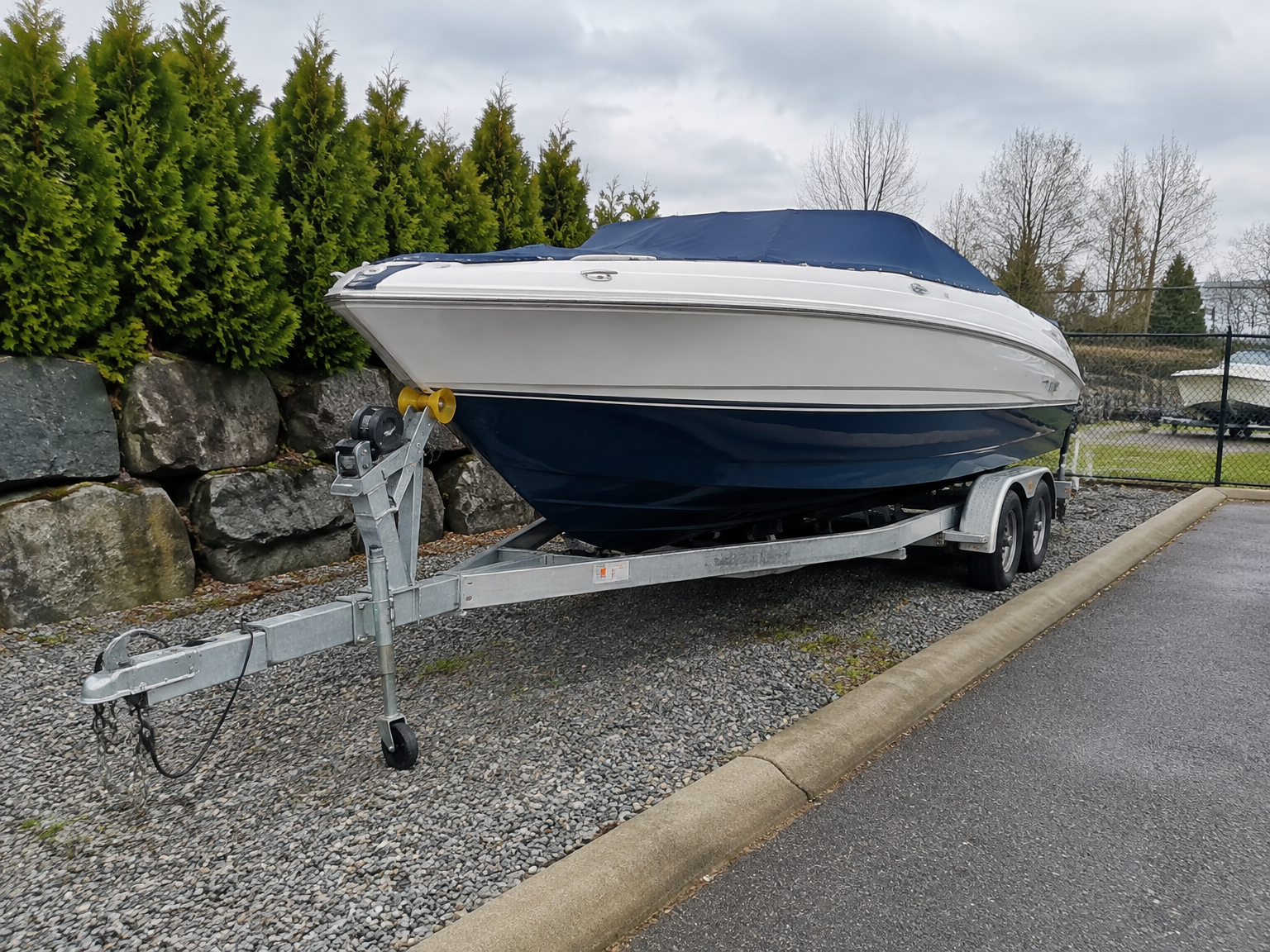
What should a host disclose and check before listing a large outdoor space?
An accurate listing gives renters enough information to judge fit before they arrive. Hosts should describe the usable dimensions, route, surface, hazards, access, permitted activities, and local restrictions instead of relying on a broad label such as “large lot.” They should also confirm that paid outdoor storage is allowed at the property.
- Record usable measurements. List length, width, height clearance, gate width, and any areas that cannot be used because of landscaping, structures, drainage, or neighboring access.
- Add approach photos. Show the street entrance, gates, corners, overhead clearance, surface, and final parking position. A photo from the driver’s approach can be more useful than a distant property photo.
- Describe surfaces and hazards. Identify concrete, asphalt, gravel, soil, or grass, along with soft spots, slopes, branches, standing water, exposed fixtures, and areas that become difficult after rain.
- Set access and retrieval rules. Explain available hours, required notice, gate procedures, host coordination, and whether the renter may inspect or retrieve the vehicle during the booking.
- State permitted equipment and activities. Clarify whether renters may use slide-outs, awnings, steps, wheel chocks, covers, electrical connections, washing, repairs, dumping, or other equipment. Do not imply that an activity is allowed unless the listing says so.
- Check property and compliance restrictions. Review zoning, setbacks, driveway rules, HOA or condo rules, lease terms, deed restrictions, insurance, and any limits on commercial or paid use.
Local rules vary. Some communities regulate where RVs, boats, and trailers may be stored, what surfaces are allowed, how far vehicles must sit from property lines, or whether residential paid storage is permitted. Owning the property does not automatically settle those questions.
Insurance also deserves attention. The National Association of Insurance Commissioners notes that homeowners policies can vary and may exclude or limit business or home-sharing activity. Hosts should ask an insurance professional whether their coverage fits the proposed use. Parking Mate does not provide legal, insurance, or tax approval, so hosts should keep their own records and seek professional advice when needed.
Hosts can learn how to become a Parking Mate host and list details, photos, pricing, availability, and access rules. A careful listing reduces confusion, but it does not replace the renter’s responsibility to confirm that the full vehicle and route work.
How can Parking Mate help you find or offer an outdoor vehicle space?
Parking Mate connects renters looking for lots, storage, driveways, and outdoor spaces with hosts who have unused areas available. Renters review listing details, photos, dates, and instructions before booking and pay through Stripe. Hosts choose their own pricing and availability, while the platform shows applicable fees before confirmation.
For renters, the practical workflow is straightforward: search for an appropriate space, compare the complete route and storage conditions, ask about unclear measurements, select dates, and follow the host’s arrival instructions. Parking Mate does not inspect or guarantee the physical dimensions or condition of every listing, so careful review remains essential.
For hosts, the listing should make the space easy to evaluate without overstating what it offers. Include the actual usable footprint, approach limitations, surface type, access schedule, retrieval rules, and any restrictions on equipment or activity.
Listing is free for hosts. Parking Mate publishes a 3.9% plus $0.30 host processing fee per booking, deducted from the host payout, and a 10% renter service fee on the booking subtotal. Hosts set the listed price and availability, and renters see fees before confirming.
You can also review the Parking Mate pricing and fees page before booking or listing. Whether the need is temporary trailer parking, private boat storage, monthly RV storage, or driveway and side-yard storage, the most successful booking starts with accurate measurements and a realistic plan for getting the vehicle in and out.
Related reading
Frequently asked questions
What should I measure before booking RV or boat storage?
Measure the complete vehicle or trailer, including total length, width, height, hitch or tongue, rear equipment, and any tow vehicle needed to enter or leave the space.
Is a driveway suitable for RV or boat storage?
A driveway may work if its dimensions, entrance, surface, slope, overhead clearance, and maneuvering area match the vehicle. Local rules, HOA restrictions, and host access rules also need to be checked.
Should I choose hourly or monthly outdoor storage?
Hourly or short-term booking may fit a trip, event, move, or temporary need. Monthly availability is often more practical for seasonal storage or longer periods between uses, but each host sets the available dates and access rules.
Does Parking Mate inspect every RV or boat storage space?
No. Renters should review listing details, photos, dates, and host instructions and clarify measurements or access conditions before booking. Parking Mate does not guarantee the physical dimensions or condition of every listing.
What should hosts check before listing outdoor vehicle storage?
Hosts should check usable dimensions, access routes, surface conditions, hazards, retrieval rules, local restrictions, HOA or lease terms, insurance, and any limits on paid use of the property.