
What private pool rental safety problems should hosts anticipate?
Private pool rentals create safety questions that ordinary backyard use may not raise. Unfamiliar renters may not know who is watching the water, how children reach the pool, which features are off-limits, or what to do in an emergency. Rules matter, but they cannot replace safe property conditions and active supervision.
Common problems include:
- Renters assume the host or a lifeguard is supervising.
- Children or weak swimmers reach the water without close adult attention.
- A gate, door, alarm, or access route does not work as expected.
- The listing fails to explain depth, slippery areas, steps, or water features.
- Pool chemicals are unsecured or the water has not been properly tested.
- A rushed turnover leaves glass, toys, furniture, or other hazards nearby.
- A slide, diving board, hot tub, or drain creates a risk guests did not understand.
- A booking continues even though the pool area is not ready.
The Centers for Disease Control and Prevention notes that drowning can happen in seconds and may be silent. That is why a host should treat supervision, barriers, access control, water treatment, emergency readiness, and honest listing details as connected safeguards. A disclaimer or signed rule sheet is useful for setting expectations, but it is not a fix for a broken gate or unsafe pool surface.
How should hosts clarify who supervises swimmers?
A listing should remove any doubt about supervision before a renter books. State whether a lifeguard is provided, whether the host will be present, and whether renters must supply their own supervising adults. Children, infants, toddlers, and weak swimmers need close attention, not occasional checks from across the yard.
- State whether a lifeguard is provided. If no lifeguard is present, say so plainly. Do not let a renter assume that booking the pool includes professional supervision.
- Explain the host’s role. Tell renters whether you will remain on-site, be nearby but separate, or leave during the reservation. Your presence should not be described in a way that implies you are automatically watching every swimmer.
- Assign responsibility for children and weak swimmers. The adults who bring children or inexperienced swimmers should know that they must supervise them. The American Academy of Pediatrics recommends that a capable adult remain within arm’s reach of infants, toddlers, and weak swimmers.
- Define active water watching. A designated water watcher should stay close, remain attentive, avoid alcohol and distracting tasks, and avoid assuming another adult has taken over. The Red Cross recommends a specific person for this role rather than casual group supervision.
Use plain language in the rules. For example: “No lifeguard is provided. The adult who brings each child is responsible for close, constant supervision. Do not use a phone, drink alcohol, or leave children unattended while they are in or near the water.” That wording does not transfer every legal responsibility to the renter, but it makes the expected behavior easier to understand.
The CDC recommends close and continuous supervision, along with barriers that limit unsupervised access. Hosts can review the CDC’s drowning prevention guidance and the Red Cross home pool safety guidance when creating their rules.
Which access and equipment problems should hosts check before renters arrive?
A safe arrival path should lead renters to a controlled pool entrance, not directly from a driveway or house door into the water. Check physical features before each reservation, and remember that barriers and alarms add protection but never replace supervision.
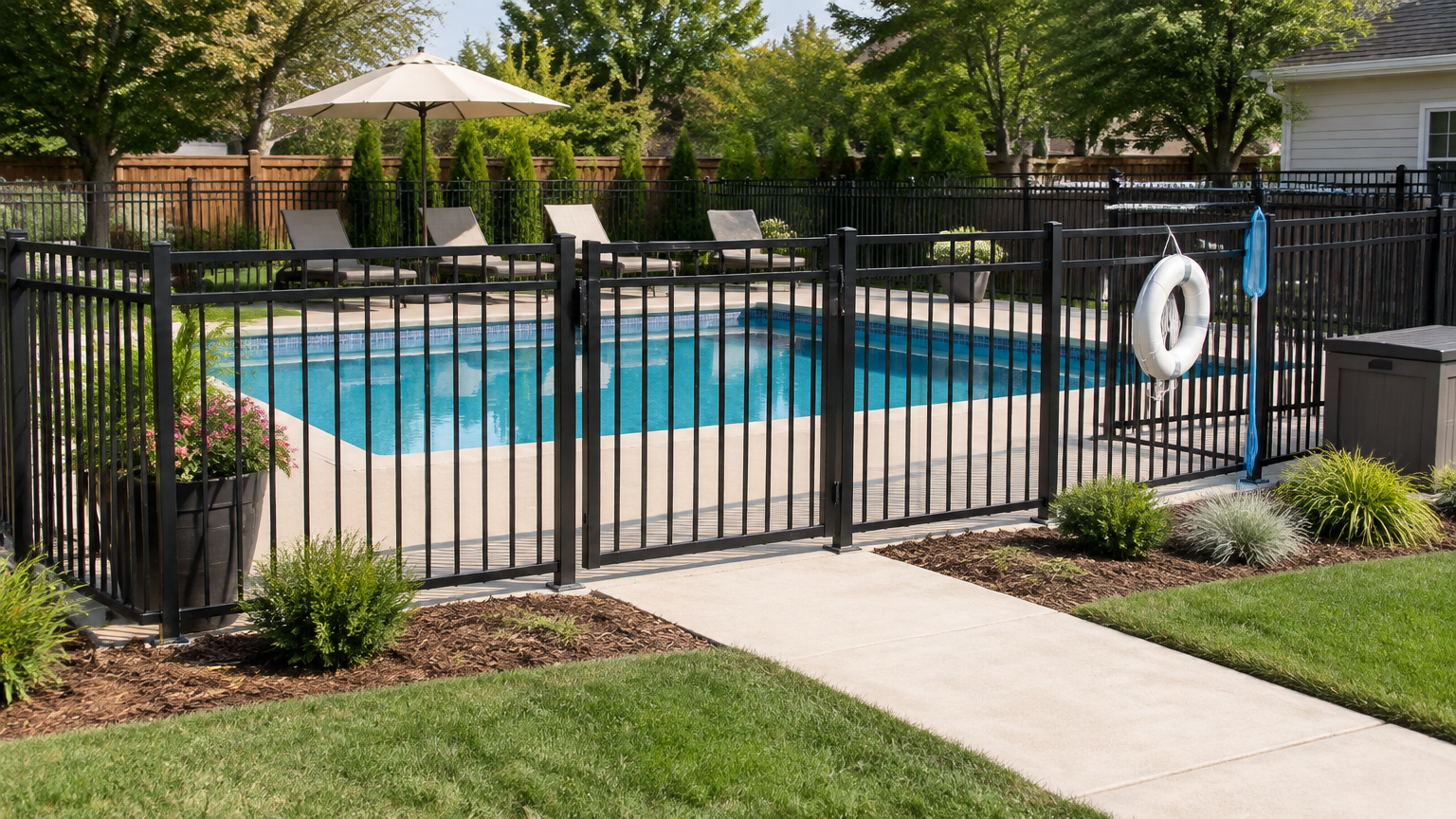
- Inspect the four-sided barrier. The fence or other barrier should fully separate the pool from the house, yard, and arrival area. Look for gaps, damaged sections, climbable objects, or furniture that could help a child get over it.
- Test the gate. A pool gate should close and latch on its own. Check that it is not propped open, blocked by furniture, or difficult to operate. A self-closing, self-latching gate is only useful if it actually works during the booking.
- Walk the access route. Check doors and windows along the path from the home, parking area, or guest entrance to the pool. Consider whether renters can reach the water through an unlocked door, open window, side gate, or shortcut that the listing does not explain.
- Check drain covers and pool equipment. Do not allow use if a drain cover is missing, damaged, loose, or visibly unsuitable. The Consumer Product Safety Commission identifies suction entrapment as a serious pool and spa hazard involving hair, clothing, limbs, or a body.
- Look over the surrounding area. Remove broken glass, sharp objects, loose cords, unstable furniture, and clutter. Check slippery surfaces, pool covers, ladders, lighting, alarms, rescue equipment, slides, diving boards, and hot tub controls. Any feature that is not ready should be clearly restricted or taken out of service.
The CPSC home pool barrier guidelines describe barriers, gates, alarms, and other layers of protection. They are helpful planning references, but local codes may set specific rules for a particular property.
What should a private pool rental listing disclose?
A useful listing lets renters understand the space before they arrive. Photos should support the description, not replace it. Include details that affect supervision, access, comfort, and safe use, especially when the pool has features that may not be obvious in a single picture.
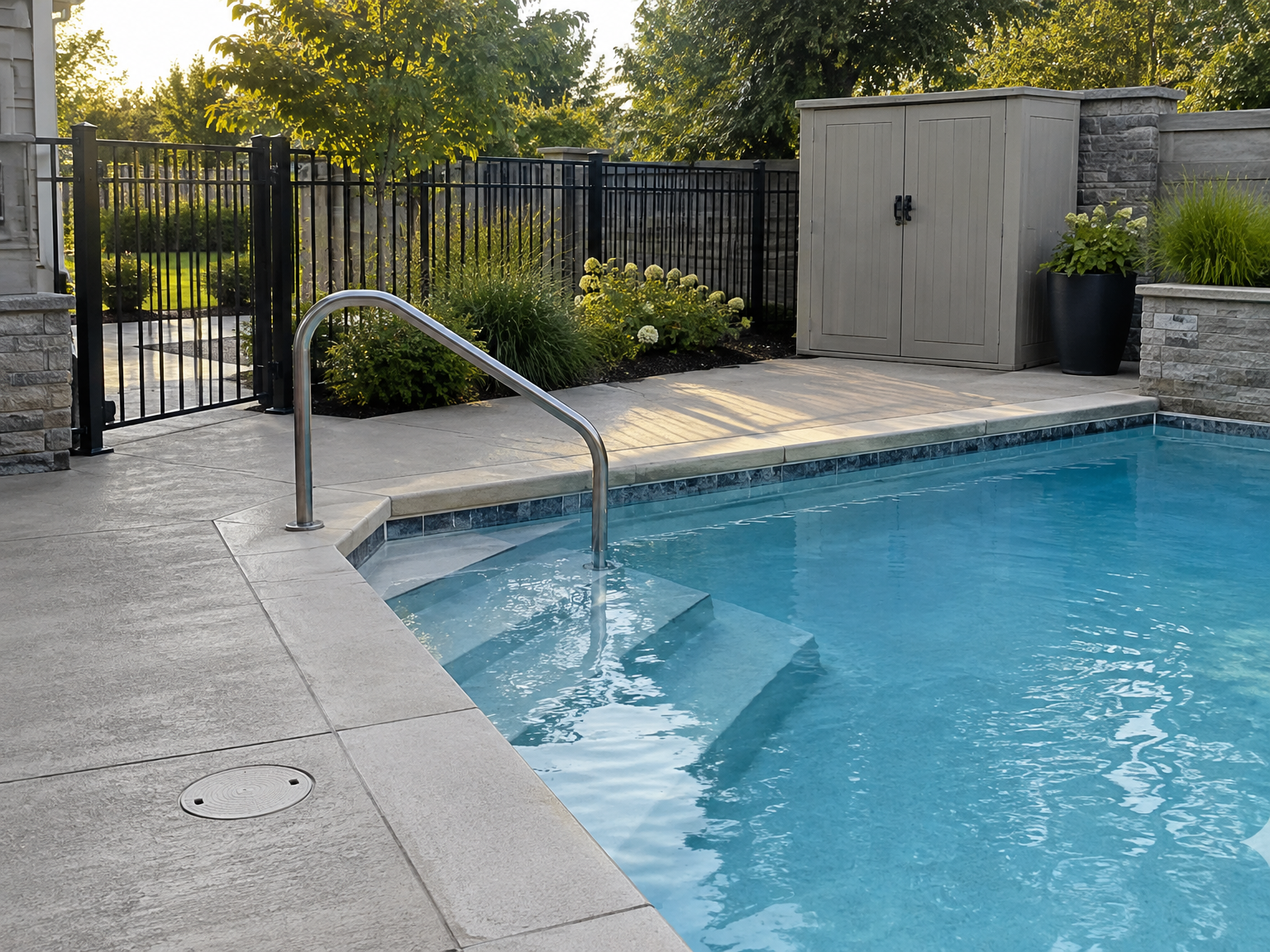
- Describe the pool layout. Include the depth range, shallow and deep areas, steps, ladders, ledges, and any sections that are not suitable for weak swimmers. If you do not know an important measurement, check it before publishing the listing.
- Point out surfaces and entry conditions. Mention slippery areas, uneven paving, narrow walkways, low lighting, or steps between the entrance and pool. Explain where renters should enter and which doors or gates they should use.
- Disclose water features. State whether the pool has a slide, diving board, hot tub, waterfall, rope, or other feature. Explain which features are allowed, restricted, or unavailable. Never assume renters will know the risks or rules for equipment they see.
- Explain practical access. Tell renters where they can use the restroom, change clothes, store belongings, and obtain drinking water. Clarify whether the host’s home, garage, or other areas are off-limits.
- Set privacy and property boundaries. Describe whether the pool is fully private, visible from the home, shared with household members, or surrounded by areas renters cannot enter. Accurate expectations can prevent a group from treating the entire property as part of the rental.
- Write the operating rules. Cover children, pets, glass, alcohol, running, diving, parties, music, guest limits, food, smoking, and pool hours. If a rule is especially important, place it near the relevant photo or in the booking instructions instead of hiding it in a long paragraph.
Hosts can browse private pool listings to see why the pool itself is only part of the information a renter needs. A complete description should help someone decide whether the space fits their group and whether they can follow its rules.
How can hosts prepare the pool area between bookings?
A short reset between reservations should cover more than skimming leaves from the water. Give yourself enough time to inspect the access route, check visible pool conditions, secure hazards, and confirm that emergency equipment is ready. Treat this as responsible operating guidance, not a complete legal inspection.
- Reset the entrance and barriers. Close and test gates, remove objects that could be used for climbing, check doors and alarms, and make sure the arrival path is clear. Confirm that renters will not be directed through an area that is locked or unsafe.
- Check water and visible conditions. Look for unusual cloudiness, debris, strong odors, damaged surfaces, loose fittings, or problems with ladders and steps. Test and record water treatment as appropriate for the pool. The CDC identifies chlorine and pH control as key parts of residential pool water care.
- Secure chemicals and remove hazards. Store chemicals away from children and pets, follow product labels, and keep glass, sharp objects, loose cords, excess furniture, and unsafe toys out of the pool area. Chemical storage should never depend on renters remembering a warning.
- Confirm emergency readiness. Make sure lighting works, the address or location can be communicated to emergency responders, and rescue equipment is accessible. Adults responsible for the group should know how to call for help and respond safely to a person in distress. CPR training can be valuable, but a host should not claim to provide emergency care unless that is actually part of the arrangement.
The CDC’s pool water treatment guidance explains routine chlorine and pH considerations. If testing shows a problem, pause the booking rather than trying to solve it while guests are already swimming.
How should pool hosts schedule bookings to avoid safety problems?
Pool rental scheduling is a safety decision because every reservation needs time for arrival instructions, inspection, cleanup, maintenance, and incident follow-up. Back-to-back bookings can create pressure to accept the next group before the previous group has fully left or before a problem has been corrected.
Set a realistic arrival window and a firm end time. Give renters enough information to find the correct gate without wandering through the property. If a group is larger or the booking includes children, parties, or water features, leave additional time for a careful reset.
A host may also need to pause the calendar after a broken gate, chemical issue, storm, injury, contamination concern, or equipment failure. It is better to cancel or reschedule than to invite renters into an area that is not ready. Clear guest limits and access rules reduce the chance that a small reservation becomes an unplanned event.
Parking Mate lets hosts control listing availability and booking conditions, but the calendar does not inspect the property for you. When you learn how hosting works, think of schedule control as one operating tool, not proof that a pool is prepared for use.
What local rules and insurance questions must hosts resolve?
Paid residential pool use may be regulated differently from ordinary private use. Hosts should check state and local health department rules, permits, inspections, pool-barrier codes, zoning, HOA or lease restrictions, and rules for paid events, alcohol, noise, food, and guest limits. Insurance coverage also needs direct confirmation.
The CDC Model Aquatic Health Code is guidance, not a nationwide law. A state, local, territorial, or tribal authority may adopt all, part, or none of it. Do not assume that a recommendation in the code automatically applies to your home.
Minnesota provides a useful example of why local research matters. The Minnesota Department of Health says that a homeowner renting a pool to customers through a sharing-economy app or another platform has effectively turned the pool into a public pool under that state’s definitions. That does not establish the rule everywhere.
Ask the appropriate local or state pool authority:
- Is paid residential pool use allowed at this property?
- Is a permit, inspection, or operating plan required?
- Which barrier, gate, drain-cover, sanitation, and emergency rules apply?
- Are there special rules for parties, alcohol, food, or guest limits?
- Do zoning, HOA, landlord, or lease terms restrict the activity?
Also ask your insurer or an insurance professional whether paid pool use is covered, excluded, or treated as business activity. Do not assume homeowners insurance covers renter injuries, property damage, or commercial bookings. Parking Mate is not an insurer, lawyer, inspector, or source of legal approval.
How can Parking Mate help hosts make pool expectations visible?
Parking Mate can organize the marketplace side of a pool rental by giving hosts a place to describe the space, add photos, set availability, and state access rules and booking conditions. That visibility can reduce avoidable confusion, but it does not replace maintenance, supervision, inspections, insurance advice, or local approval.
A host can use the listing to explain:
- Whether a lifeguard is provided
- Whether the host will be present
- Who must supervise children and weak swimmers
- How renters enter and leave the pool area
- Which parts of the property are off-limits
- What the pool depth, layout, and features are
- Whether glass, alcohol, pets, diving, or parties are restricted
- How many guests the host will accept
- What renters should do during an emergency
Photos should show the actual access route and pool surroundings without hiding important limitations. Update them when the gate, deck, furniture, water features, or surrounding property changes. A listing should never describe a feature as available when it is broken or unsafe.
Parking Mate hosts set their own prices and availability, and the platform can help keep booking conditions in one visible place. The host still decides whether the property is ready, whether the booking fits the rules, and whether local requirements and insurance questions have been resolved. If a safety concern remains unanswered, do not treat a listing, waiver, or booking confirmation as permission to proceed.
Related reading
Frequently asked questions
Should a private pool rental include a lifeguard?
Not every private pool rental is subject to the same lifeguard rule, and no universal national requirement applies to every situation. The listing should clearly state whether a lifeguard is provided. Renters must know who is responsible for supervising children and weak swimmers.
What should hosts disclose about a private pool?
Hosts should describe the pool depth and layout, steps, ladders, slippery surfaces, slides, diving boards, hot tubs, restroom access, arrival route, privacy limits, off-limits areas, guest rules, and any other feature that could affect how renters use the space.
Do pool rules and waivers remove a host's responsibility?
No. Written rules can reduce confusion, but they do not replace safe property conditions, active supervision, maintenance, local compliance, or proper emergency planning.
Does Parking Mate provide pool inspections or insurance?
No. Parking Mate can help hosts organize listing details, access rules, availability, and booking conditions, but it does not provide insurance, legal approval, lifeguards, inspections, or guaranteed pool safety.