
What changes when you book private parking through a marketplace instead of paying the host directly?
A private parking marketplace brings the listing, dates, price, payment step, and arrival details into a more organized booking process. With direct payment, the arrangement may still be genuine, but the renter and host usually have to create and preserve those details through messages, receipts, and a written agreement.
A marketplace gives both sides a shared starting point. The renter can review the space description, photos, availability, price, and any stated access rules before selecting dates. The host controls the information shown in the listing and decides when the space is available.
A direct arrangement often begins with a classified ad, a social media post, a text message, or a personal introduction. The renter may ask questions, negotiate a price, and send money without a single booking record tying the payment to the exact parking space and dates. That doesn't make the arrangement fraudulent. It does mean the documentation can be scattered.
The practical difference is how much structure surrounds the transaction. A marketplace may organize the booking and payment steps, while a direct arrangement leaves more responsibility with the people involved. If you're comparing options, start by finding available private parking and checking what information is available before you agree to pay.
How do the two private parking booking workflows differ?
The marketplace workflow generally connects a listing review to selected dates, payment, and host instructions. A direct arrangement usually depends on messages and independent coordination, so the renter must confirm that the money sent matches the promised location, time period, and access terms.
| Booking detail | Private parking marketplace | Direct payment arrangement |
|---|---|---|
| Finding the space | Review a listing with available details, photos, price, and availability | Find a host through messages, a classified ad, or a personal connection |
| Dates and availability | Select dates or times based on the host's published calendar | Ask the host to confirm availability, often through messages |
| Payment handling | Pay through the marketplace's Stripe-based payment workflow | Send cash, a check, bank transfer, or payment through an app or other method agreed with the host |
| Fees | Applicable marketplace fees are shown before confirmation | The host and renter agree on the amount and any extra costs themselves |
| Identity checks | Parking Mate states that hosts and renters are verified through Stripe | Each party may need to assess the other's identity independently |
| Booking record | A booking can connect the space, dates, price, fees, and payment status | Messages, receipts, and bank records may exist, but they may not be centralized |
| Arrival instructions | Follow the host's stated parking and arrival instructions | Ask the host for instructions and save the response |
| Changes or problems | Refer back to the listing, booking information, payment record, and written communications | Rely on the agreement, messages, receipts, and whichever payment or recovery process applies |
Parking Mate's published renter workflow is to review a listing, book dates, pay through Stripe, and follow the host's arrival instructions. It does not mean every possible problem disappears. A listing may still need clarification, and a booking record does not prove that a host owns the property or has permission to rent it.
The informal option can be perfectly workable when both parties communicate clearly. Still, a payment receipt is not the same as a parking reservation. A receipt may show that money moved, but it may not show whether the space was blocked, whether overnight parking was allowed, or what would happen if plans changed.
Is direct payment actually cheaper for private parking?
Direct payment may look cheaper because it can avoid a marketplace service fee, but the headline amount isn't the entire comparison. Parking Mate publishes a 10% renter service fee, shows fees before confirmation, and deducts a 3.9% plus $0.30 processing fee from the host's payout.
The host sets the base price and availability. For a Parking Mate booking, the renter sees the applicable charges before confirming, while the host receives the listed price minus the published host processing fee. You can review Parking Mate's published fees before deciding whether the structure is worth the cost for a particular booking.
A direct payment arrangement may involve fewer visible fees, but the parties may spend more time handling questions, changes, receipts, refunds, and access instructions. Those costs aren't always financial. A host may need to coordinate every arrival manually, and a renter may have to resolve a disagreement using scattered texts and a payment statement.
The right comparison is not “fee versus no fee.” It is price plus documentation, convenience, and payment handling. Direct payment could be less expensive in one situation and less practical in another. Neither option guarantees savings, and neither option is automatically the better choice for every booking.
Keep local rules in mind as well. A host may need to check zoning, permit, HOA, condominium, lease, insurance, or property-use restrictions. Taxes and insurance questions also depend on the host's circumstances. Paying through a marketplace does not create legal approval or insurance coverage.
What should you confirm before sending direct payment for parking?
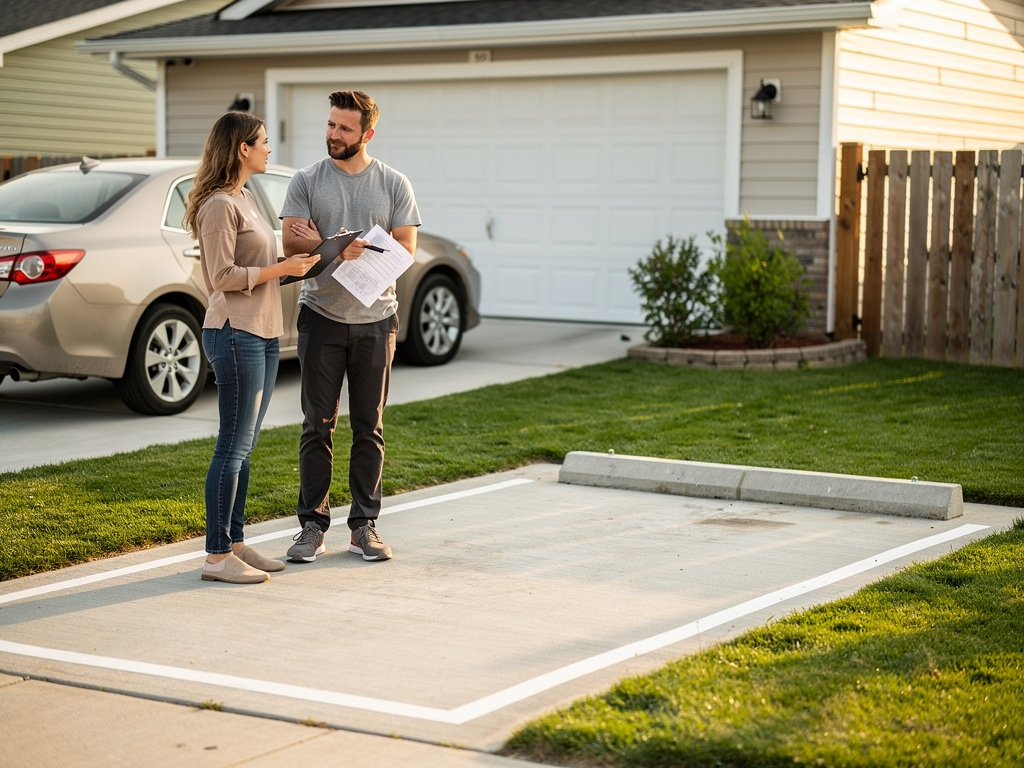
Before sending direct payment, confirm six practical details in writing: the exact location, dates and times, usable space, arrival instructions, total terms, and the identity of the person receiving the money. Save the confirmation before paying, and be cautious with payment methods that are difficult to recover.
- Confirm the exact parking location.
Ask for the street or property location and identify the specific driveway, garage, lot area, or assigned space. If the property has several spaces, confirm which one you may use. Make sure the location matches any photos or description you received.
- Confirm the dates and times.
Write down when parking begins and ends. For event parking, clarify whether the space is reserved for a particular arrival window. For recurring or monthly use, state the first date, renewal terms, and whether the arrangement ends automatically or requires notice.
- Confirm the space and vehicle restrictions.
Ask whether your vehicle fits the space and whether there are limits on height, length, width, trailers, commercial vehicles, overnight parking, or leaving items inside the vehicle. Surface condition, clearance, lighting, and access width may matter too.
- Confirm how arrival and departure work.
Get clear instructions for entering, parking, leaving, and handling a blocked or occupied space. Ask whether a gate, permit, remote, key, or host contact is involved. Don't assume that a visible driveway is available for any time of day.
- Confirm the full price and cancellation terms.
Put the total amount, due date, deposits, taxes if applicable, cancellation rules, and refund expectations in writing. A short message is better than a verbal promise, but a simple written agreement may be useful for longer or more expensive arrangements.
- Confirm the host and payment recipient.
Make sure you know who is offering the space and whether that person is authorized to do so. Be wary of unusual requests for financial information, identity documents, gift cards, wire transfers, or payment before basic questions are answered.
General marketplace guidance from the FTC marketplace safety guidance recommends keeping copies of messages, terms, receipts, and payment records. Classified-ad guidance, including Craigslist scam-avoidance guidance, also warns about advance payment, wire transfers, gift cards, and unusual verification requests.
No single payment method makes a private parking arrangement risk-free. A familiar payment app may still produce a record, while cash may produce very little evidence unless the host gives a signed receipt. The important question is whether you understand what you're paying for and can show the agreement later.
What records matter if the host changes the parking terms after payment?
Keep more than a payment receipt if the parking terms might be disputed. The useful record includes the original listing, booking details, messages, arrival instructions, price, cancellation terms, refund communications, and proof of payment. These records help reconstruct what access was promised, without guaranteeing a favorable dispute result.
A payment confirmation can show that money was sent. It may not show whether the host promised a covered garage, a particular space, overnight access, or a refund when the spot became unavailable. That is why the promise and the payment should be saved together.
For a marketplace booking, retain:
- The listing description and photos
- The selected dates or booking period
- The price and fee information
- The booking confirmation
- Arrival and parking instructions
- Any messages about changes or access
- Cancellation, refund, or support communications
- The payment receipt or account statement
For a direct agreement, save the same information in a folder or email thread. Consider writing a short summary after the discussion: “Parking at [location] from [date and time] to [date and time] for [amount], with [access instructions] and [cancellation terms].” Ask the host to confirm that summary before sending money.
If the host changes the terms, document the change immediately. Note when you learned about it, what the original instructions said, what the replacement instructions are, and whether you accepted the change. Don't delete earlier messages simply because the arrangement was updated.
Payment processors may consider customer communications, receipts, refund policies, and service documentation when reviewing a dispute. Stripe's dispute documentation describes examples of evidence, but no record guarantees that a dispute will be decided for the renter or host. Recovery options also vary by payment method and situation.
When is a marketplace more practical than a direct parking arrangement?
A marketplace may be more practical when you want organized booking details, visible fees, Stripe payment, and a clearer connection between the space, dates, and instructions. Direct payment may be simpler when both parties already know one another, but the terms still need to be written clearly.
For one-time event parking, the timing and arrival instructions matter most. A marketplace can make it easier to connect a selected booking period with the host's stated instructions. With direct payment, confirm exactly when the space will be open and what happens if the event runs late.
For recurring commuter or monthly parking, write down renewal dates, access hours, notice requirements, and what happens if either side wants to end the arrangement. A casual text exchange may be enough for a short favor, but a longer arrangement deserves a more complete record.
For an unfamiliar host, identity and property details deserve extra attention. Parking Mate states that hosts and renters are verified through Stripe, but verification is not proof of property ownership, permission to rent the space, or guaranteed access. Independent questions about the location and instructions still matter.
For a repeat arrangement between people who already know each other, direct payment may involve less setup. Even then, a written confirmation protects both sides from simple misunderstandings about dates, price, vehicle restrictions, or cancellation.
Hosts should also consider the time involved. Collecting money directly may avoid a marketplace fee, but the host is responsible for answering questions, tracking availability, confirming payments, sending instructions, and maintaining records. A platform can be useful when the host wants those booking details connected to a published listing and calendar.
What does Parking Mate add to a private parking booking?
Parking Mate adds a documented path from listing to booking: the host sets the price and availability, the renter reviews the space, selects dates, pays through Stripe, and follows the host's arrival instructions. Parking Mate uses Stripe-based verification, but it does not promise insurance, legal approval, or guaranteed access.
The platform's structure can make important details easier to locate. A renter can compare the listing with the booking information, while a host controls availability and access rules. Fees are shown before confirmation, which gives the renter a chance to review the total before completing the booking.
Parking Mate also states that it does not handle card data on its own checkout page because Stripe handles payment information. That describes the payment setup, not a promise that every transaction will be trouble-free. Renters and hosts should still keep their own copies of booking and payment records.
For hosts, the benefit may be less about avoiding every message and more about having a listing-based process for price, availability, and bookings. For renters, the benefit may be having more than a bare payment receipt when checking what was reserved.
The balanced takeaway is simple: structure is useful, but it is not a guarantee. A private parking marketplace can organize information, fees, payment, verification, and instructions. Direct payment can work when both sides are careful and document the agreement. Whichever route you choose, check the space, confirm the terms, use a payment method you understand, and save the records.
Related reading
Frequently asked questions
Is direct payment for private parking always unsafe?
No. A direct arrangement can be legitimate, especially when the renter and host know each other. The main concern is that the parties may need to create, confirm, and preserve the listing details, payment terms, access instructions, and cancellation rules themselves.
Does a private parking marketplace guarantee safe parking?
No marketplace can automatically guarantee that a space is safe, legally available, or accessible as promised. A marketplace may provide more organized booking information, payment handling, and verification, but renters should still review the listing and instructions carefully.
Is paying directly cheaper than using Parking Mate?
Direct payment may appear cheaper because it may avoid a marketplace service fee, but the total comparison includes more than the headline price. Parking Mate publishes a 10% renter service fee and shows applicable fees before confirmation.
What should I save when booking private parking?
Keep the listing, selected dates, price and fee details, messages, arrival instructions, cancellation or refund communications, receipts, and proof of payment. Together, these records show what parking access was discussed and what was actually paid for.