
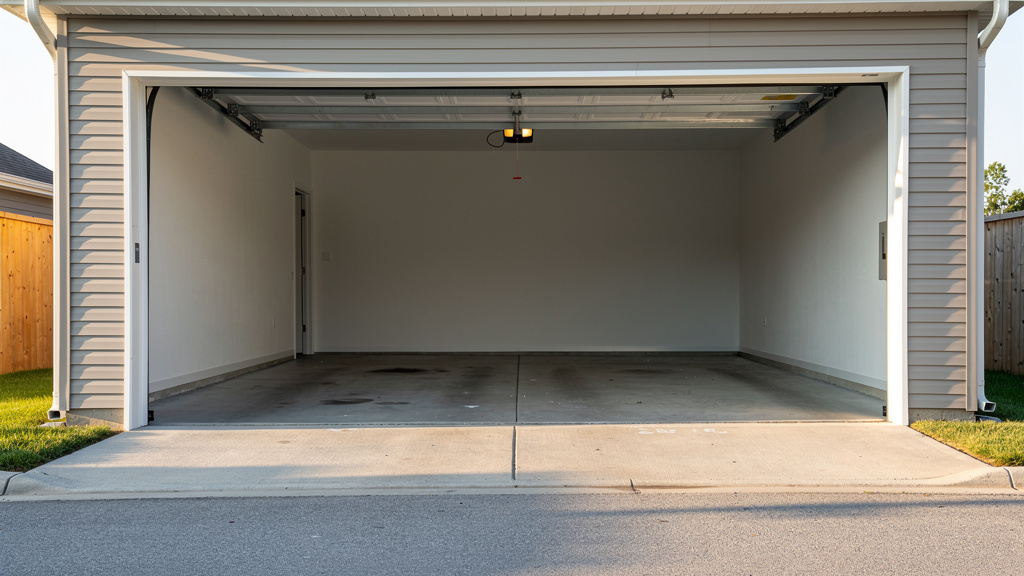
What should you clear from a garage parking space before renting it?
A rentable garage stall should be clean, open, and easy to use from the renter’s point of view. Remove clutter from the vehicle route, protect anything that stays nearby, and separate normal housekeeping from items that may create fire, chemical, or access concerns.
- Vehicles and everyday clutter should leave the assigned stall. Move cars, bikes, boxes, lawn equipment, loose tools, and seasonal items out of the parking area. A renter needs enough room to enter, center the vehicle, open the doors, and walk around it.
- The full driving path needs attention, not just the spot where the vehicle will sit. Look from the garage opening to the rear wall and remove objects that narrow the route. Shelves, cabinets, appliances, posts, and stored materials may create a tight turn or an impact point.
- Items that remain nearby should be stable and outside the renter’s normal path. Secure shelving, hanging storage, ladders, and wall-mounted equipment. Keep belongings from leaning into the stall, falling onto a vehicle, or forcing the renter to park too close to one side.
- Hazardous materials deserve a separate review. Fuel containers, solvents, batteries, paints, and powered equipment can create safety concerns in a garage. Follow applicable local rules and manufacturer instructions for storage, and don't give a renter access to private items that should remain restricted. NFPA educational material discusses several fire hazards commonly found in garages.
Sweep the floor and inspect for oil, standing water, sharp debris, damaged concrete, or anything that could affect walking or parking. Cleaning won't fix a structural or mechanical problem, so repair or disclose conditions that could change how the renter uses the space.
If you still use part of the garage for storage, mark the renter’s area clearly without creating a trip hazard. A strip of floor marking or a simple description in the listing may be enough, provided it doesn't narrow the usable stall.
Which garage measurements should you record for renters?
A useful garage listing describes the actual usable space, not an assumed standard size. Record seven dimensions and note the narrowest or lowest point where an obstruction changes the available clearance.
- Usable interior width: Measure between the closest permanent side obstructions, not just between the broadest parts of the walls.
- Usable interior depth: Measure from the practical parking line to the rear limit. Account for shelves, appliances, stored items, and the room needed to walk around the parked vehicle.
- Garage-door opening width: Measure the opening the vehicle must pass through. The opening may be narrower than the interior parking area.
- Garage-door opening height: Record the height from the floor to the lowest part of the opening. A vehicle must clear this point before it reaches the larger interior space.
- Ceiling height: Measure from the floor to the ceiling or lowest permanent ceiling feature. Pipes, lights, storage racks, and ductwork may reduce usable height.
- Headroom: Check the area above the vehicle for door tracks, the opener, springs, beams, and suspended storage. The garage-door measurement guide from Home Depot and Clopay treats headroom as a separate consideration.
- Side and rear obstructions: Record posts, walls, shelving, equipment, steps, doors, and other features that affect entry, parking, or getting out of the vehicle.
Write measurements in a consistent unit and explain where each one was taken. A simple note such as “narrowest width at the shelving” is more useful than a rounded estimate. If the floor slopes, has a raised edge, or includes a drain, mention that condition too.
How can you check whether a renter’s vehicle will fit safely?
Compare the garage’s measurements with the renter’s actual vehicle dimensions before confirming a booking. Vehicle categories alone are too broad. Two SUVs or trucks can have different widths, heights, turning needs, mirrors, and equipment, so don't promise that an entire vehicle class will fit.
Ask the renter to consider the vehicle as it will arrive. Mirrors, roof racks, antennas, lift kits, running boards, cargo boxes, and other accessories can change the required clearance. The vehicle also needs room for the driver and passengers to open doors without hitting a wall, post, or neighboring storage.
Test the complete route yourself if possible. Open the garage door fully, check whether the opener and tracks remain clear, and look at the approach from the driveway or street. Confirm that lights work and that the renter won't need to move personal items each time they park.
Pay close attention to equipment or appliances in the normal driving path. ICC material discusses the importance of checking objects located between the vehicle opening and the interior back wall, though local rules and specific property conditions vary. The practical takeaway is simple: identify anything a driver could hit and remove, protect, or clearly disclose it.
If the renter’s vehicle seems close to the limit, ask for exact dimensions and be honest about the uncertainty. It is better to restrict the listing to vehicles that clearly fit than to rely on a vague promise such as “large vehicle friendly.”
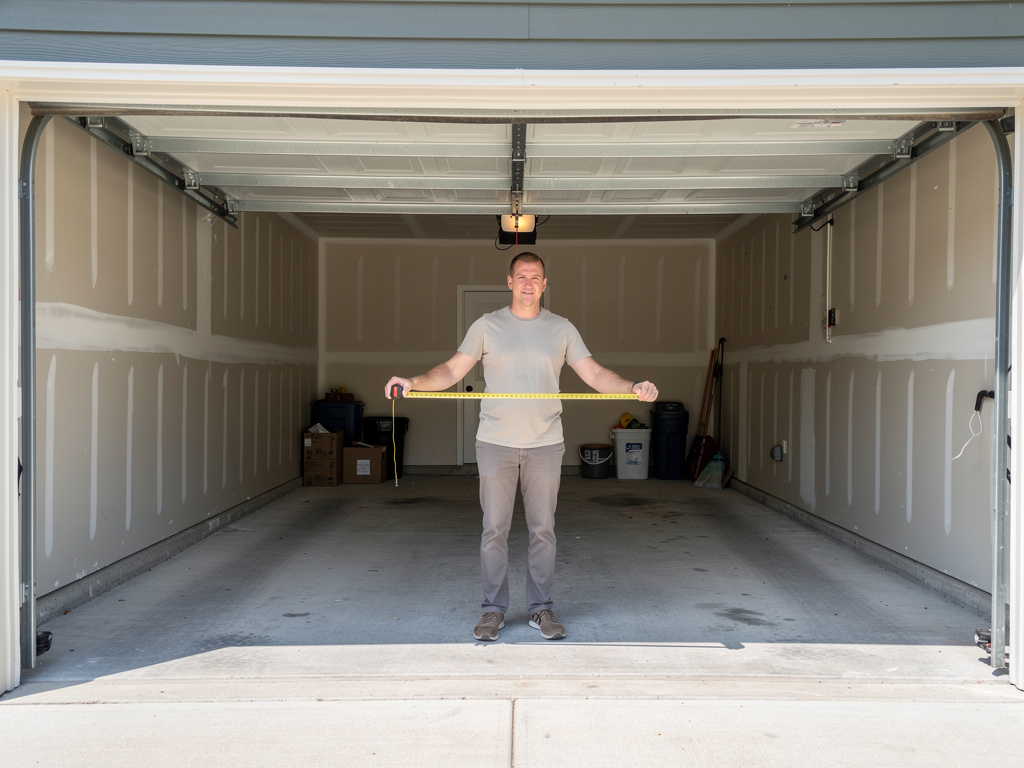
What access and parking rules should you give renters?
Arrival instructions should let someone unfamiliar with the property find the entrance, reach the stall, park without guesswork, and leave the garage properly. Share sensitive access details privately after booking rather than placing codes or security information in a public listing.
- Describe the approach: Explain which driveway or street entrance to use and whether the renter should approach from a particular direction.
- Identify the garage entrance: Give clear visual landmarks and say which door or side of the property contains the parking space. Avoid relying on house numbers or details that may be hard to see at night.
- Explain access: State whether the renter uses a remote, keypad, key, host-provided entry, or another method. Include what to do if the door does not open, but don't publish an active access code for everyone to see.
- Mark the assigned stall: Tell the renter exactly where to park and how far forward or to which side the vehicle should sit. Mention walls, posts, storage, or other clearance limits.
- Explain departure: Say whether the renter should close the garage door, return a remote, lock a side door, or send a message after leaving. Include access hours and any rules about idling, guests, repairs, washing vehicles, or storing belongings when those rules apply.
Keep the instructions practical rather than legalistic. For example, “Park with the driver’s side away from the shelving so the door can open” gives a renter more help than “Use the space carefully.”
If the garage is attached to your home, explain any pedestrian route and areas that are private or off-limits. A renter should not need to guess whether a side door, utility room, or personal storage area is available.
What should photos and the listing description show?
Photos should show the space as a renter will encounter it, including the approach, opening, interior limits, and any low or narrow points. Pair the images with a plain description of measurements, access, lighting, storage limits, and vehicle restrictions instead of hiding difficult conditions.
- The complete parking stall: Photograph the full area from a corner or the entrance so viewers can see the floor, side walls, rear limit, and available driving space.
- The approach and garage opening: Show the driveway approach and the garage entrance from a useful angle. Include the path a renter must follow, not just an attractive interior view.
- Overhead and low-clearance areas: Capture tracks, the opener, beams, lights, pipes, racks, or other features that may affect taller vehicles.
- Floor, walls, and fixed obstructions: Show posts, shelves, appliances, steps, drains, uneven surfaces, stains, or other conditions that affect parking and walking.
Take photographs after clearing the stall and turn on the normal lighting. Don't use angles that make a narrow space look wider or crop out a low obstruction. If the space changes when you move stored items, update the listing photos so they match the current condition.
A strong description might state the measured opening, the usable interior dimensions, the type of access, and whether personal storage remains beside the stall. Mention if the garage door must stay closed, if overnight parking is allowed, or if the renter cannot store boxes or equipment in the space.
What should you check before offering the garage to renters?
A clean stall is only one part of the decision. Check whether you are allowed to rent the space, whether any physical changes need local review, and how the activity affects insurance and taxes. These questions depend on your property and location.
- Review HOA or community rules: Condo, co-op, HOA, and planned-community documents may address parking assignments, outside users, commercial activity, or short-term rentals.
- Check your lease or ownership permission: If you rent the home, ask the landlord or property owner before listing an assigned garage or parking stall. Having access to a space doesn't automatically give you permission to rent it to someone else.
- Ask about local building and fire rules: Contact the appropriate local office before making changes to doors, electrical systems, floors, walls, storage, or access. Rules vary, and a code provision from one state should not be treated as a nationwide standard.
- Discuss insurance and taxes: Ask an insurance professional how repeated parking rentals affect property and liability coverage. The Insurance Information Institute notes that homeowners coverage may not address every rental situation. A qualified tax professional can explain any reporting or expense questions.
Parking Mate is not an insurer, lawyer, or tax advisor. A listing or booking does not replace your responsibility to check property rules, insurance terms, local requirements, or tax treatment.
Also inspect the garage door before listing. It should open and close reliably, stop as expected, and leave the advertised clearance. If access depends on a remote or keypad, test the process from the renter’s likely arrival position.
How do you turn the prepared garage into a Parking Mate listing?
Once the stall is ready, create a Parking Mate listing with accurate details, photos, price, availability, and access rules. Hosts set their own hourly or monthly rates and control the calendar, so the listing should reflect the space you can actually offer rather than an idealized version of it.
Start with the details a renter needs to judge fit: garage opening dimensions, usable interior measurements, clearance limits, access hours, assigned-stall instructions, and restrictions on vehicle size or stored belongings. Include the approach and departure steps, but keep private codes and sensitive security details for the appropriate booking stage.
Add the photographs you took after preparing the space. If the garage is shared, make the renter’s boundaries clear. If the space is only suitable for certain vehicles, describe the limitation carefully and ask renters to compare their vehicle dimensions with the measurements.
You can learn how hosting works before publishing. Parking Mate lets hosts manage listing information, availability, and pricing, while renters review the listing, book dates, pay through Stripe, and follow the host’s arrival instructions.
When the details are ready, list your prepared garage on Parking Mate. Keep the listing current if storage moves, access changes, the garage door is repaired, or the usable clearance becomes different. Accurate information makes the space easier for the right renter to evaluate before arrival.
Related reading
Frequently asked questions
What should I measure before renting out a garage parking spot?
Measure the usable interior width and depth, garage-door opening width and height, ceiling height, headroom, and side or rear obstructions. Record the narrowest and lowest points instead of relying on a general description such as single-car garage.
How can I tell if a renter’s vehicle will fit in my garage?
Compare the garage measurements with the renter’s actual vehicle dimensions, including mirrors, roof racks, antennas, lift kits, and other accessories. Check both the entrance and the full path to the parking position.
What should garage parking listing instructions include?
Explain the approach from the street, the exact garage entrance, how access works, the assigned stall, vehicle-positioning limits, access hours, and what the renter should do when leaving.
Does Parking Mate provide insurance for a rented garage parking space?
Parking Mate is not an insurer and should not be treated as a substitute for insurance advice. Ask an insurance professional how renting your garage affects property and liability coverage.