
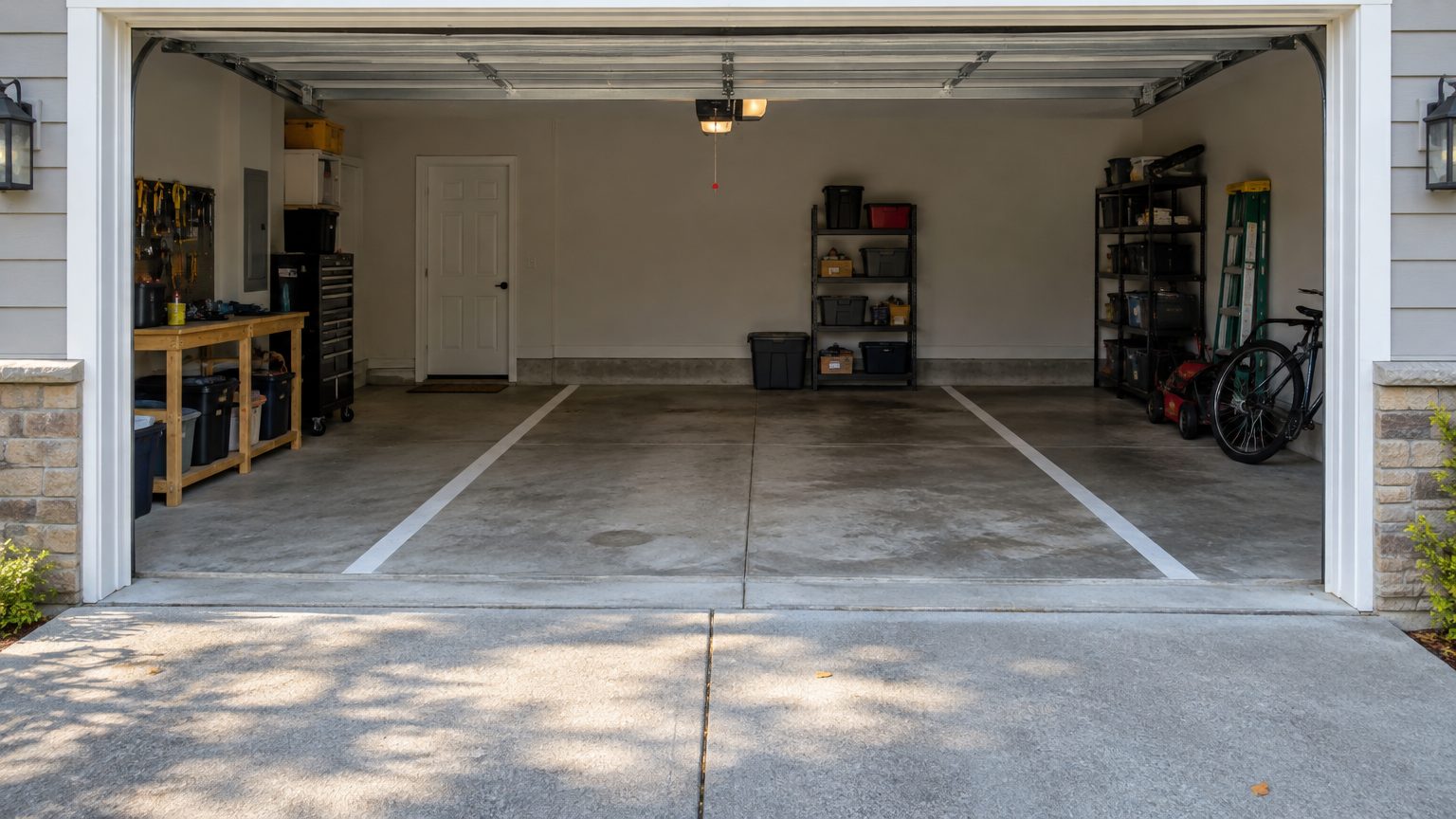
Does garage parking rental income count as gig income?
Yes, in the broad sense used by the IRS, renting out a garage, driveway, or other part of your property may fit within gig-economy activity. But “gig income” is a broad description, not a final tax classification. The way you report the money can depend on the rental arrangement, services provided, and other facts.
The IRS Gig Economy Tax Center includes renting out property or part of property among gig-economy activities. That can include a homeowner offering an unused garage parking space for hourly or monthly use. The label describes how the income was earned, especially when a marketplace connects you with renters.
It does not automatically mean self-employment income. A simple arrangement where someone pays to use a defined parking space may be closer to rental real estate activity than to labor-based freelance work. In general, ordinary rental real estate income is treated differently from payment for services.
That distinction matters because the words “gig income,” “rental income,” and “self-employment income” are often used interchangeably in casual conversation. They are not necessarily interchangeable on a tax return. The IRS guidance on gig activity is a useful starting point, but it does not decide your individual filing position.
Is garage parking rental income usually rental income or self-employment income?
For a basic property rental with little or no service provided to the renter, the income may generally be associated with rental real estate and Schedule E. Substantial services or other qualifying business circumstances can change the analysis, so the form should not be chosen from the word “gig” alone.
Schedule E and Schedule C serve different purposes. Schedule E is generally used for rental real estate income and expenses. Schedule C is generally used to report profit or loss from a business, profession, or other activity operated for profit. The correct choice depends on how your activity works.
| Question | Schedule E | Schedule C |
|---|---|---|
| What type of activity is it generally associated with? | Rental real estate income and expenses | Business income and expenses |
| What might a simple parking arrangement look like? | Payment for use of a garage or parking area, with limited services | An operation that includes qualifying business activity or substantial services |
| Could self-employment tax be involved? | Rental real estate income is generally not included in self-employment earnings, subject to exceptions | Business profit may be considered when determining self-employment tax |
| Does the form depend only on hourly versus monthly rent? | No. Booking frequency alone does not decide the form | No. Other facts, including services and how the activity operates, matter |
| Who should make the final determination? | A qualified tax professional reviewing your records and circumstances | A qualified tax professional reviewing your records and circumstances |
A host who simply provides access to a parking space usually should not assume that the activity belongs on Schedule C. At the same time, no one should assume Schedule E is automatic. Substantial services for a renter, a real estate business, business-entity ownership, personal use, and other details can affect the result.
Rental real estate income is generally not included in net earnings from self-employment, but exceptions can apply. Review the IRS rental income guidance and current form instructions, then ask a qualified tax professional about your situation.
Do you have to report parking rental income without a 1099-K?
Generally, you still need to track and report taxable parking rental income even if no Form 1099-K or other information return arrives. A 1099-K is a reporting document, not a test that determines whether the income exists or whether it is taxable.
A marketplace or payment processor may provide tax information in some circumstances. The timing, amount, and type of form can depend on current rules and the details of the payments. Do not rely on receiving a form as your only record of what renters paid.
A 1099-K may also show gross payment information rather than your final profit. You may need to compare it with booking records, refunds, platform fees, and other adjustments. Gross payments are not automatically the same as taxable profit, and a form should not be copied onto a return without reviewing what it represents.
Keep your own records even when the payments are easy to see in a platform account. The IRS advises gig-economy workers to keep track of income and expenses and to consider their broader tax situation. You can review the IRS guidance on Form 1099-K for general information.

What records should you keep for garage parking rental income?
Good records should show what was rented, when it was rented, what the renter paid, what you received, and which costs may relate to the activity. Keep enough detail for a tax professional to separate gross income, refunds, platform fees, and possible expenses without guessing.
A simple system can be as basic as a spreadsheet and a folder for statements and receipts. The goal is not to label every cost as deductible. It is to preserve the facts needed for a professional review and for accurate reporting.
- Record booking dates and rental periods. Note whether the space was used by the hour, month, or another period, along with the dates it was available and occupied. These details can be useful when separating rental use from personal use.
- Track gross amounts charged. Record the price shown to the renter before platform fees, refunds, discounts, or other adjustments. Keep booking confirmations or statements that support the amount.
- Match payouts to bookings. Note the amount that actually reached your bank account and the date it arrived. A payout may differ from the renter’s charge, so matching the two prevents confusion.
- Save platform fees and refunds. Keep records of processing fees, cancellations, refunds, and other adjustments. Parking Mate’s published host processing fee is 3.9% plus $0.30 per booking, deducted from the host payout.
- Document related expenses and personal use. Save receipts and notes for costs that may relate to the rented space, while identifying any personal portion. Do not assume that every repair, utility, insurance payment, improvement, or property cost is deductible.
Organizing the records monthly is usually easier than trying to reconstruct them at tax time. You can also keep a separate note about unusual events, such as a partial refund, a space being unavailable for personal reasons, or a change in how the garage was used.
For more practical organization ideas, see this guide to garage parking rental income records. The records support professional advice, but they do not by themselves determine the right tax treatment.
What can change the tax treatment of a rented garage or parking space?
Hourly, monthly, occasional, and marketplace-based bookings do not independently determine whether income is rental income or self-employment income. The broader arrangement matters, including the services you provide, how the property is used, who owns it, and whether the activity is part of a larger business.
For example, providing a defined parking space with access instructions is different from offering frequent services for a renter’s convenience. The tax analysis may also differ when a host manages several properties, operates through a business entity, or acts as a real estate dealer.
Personal use can matter too. If you use part of the garage for storage, tools, or your own vehicle while renting another part, keep clear notes about how the space is divided and used. Personal and rental use may need to be considered separately when reviewing income and expenses.
The name of the platform does not decide the classification. Renting directly, accepting monthly payments, or using a marketplace can create different records, but those payment methods do not replace an analysis of the underlying activity. Parking Mate does not determine whether your income belongs on Schedule E, Schedule C, or another part of a tax return.
The IRS generally discusses ordinary real estate rentals through Schedule E, while substantial services and other circumstances may change the reporting treatment. Read IRS Publication 527, then consult a qualified tax professional if your arrangement includes services, shared ownership, personal use, or business-entity ownership.
How does using Parking Mate fit into the income records?
Parking Mate connects hosts with renters seeking unused garages, driveways, and parking spaces. Hosts set their own hourly or monthly rates, manage availability, and track earnings, but the platform does not decide how those earnings should be classified for tax purposes or provide tax advice.
For recordkeeping, treat the platform information as one part of your documentation. Save booking details, dates, prices, payouts, refunds, and fees. Compare those records with your bank activity and any tax forms you receive. The host payout is not automatically the same as taxable profit because the tax result may depend on expenses, personal use, and other facts.
Parking Mate’s listing is free, and hosts set the price and availability for their space. The published host processing fee is 3.9% plus $0.30 per booking, deducted from the host payout. You can review the current details on the Parking Mate pricing and fees page.
The platform can make it easier to organize booking activity, but it does not replace your own records. Keep copies of statements and receipts in a location you can access if you later need to explain how an amount was calculated.
What should you check before renting out a garage parking spot?
Before listing a space, review the rules that apply to the property, the insurance policy that covers it, and the terms that control your right to rent it out. These checks are separate from federal tax classification and can vary by location, insurer, association, landlord, and lease.
- Check your homeowners or rental insurance policy. Ask the insurer whether renting out a garage or parking area is addressed and whether additional coverage or policy changes may be needed. Do not assume a standard policy covers every paid rental arrangement.
- Review HOA, condominium, and lease rules. Association bylaws, condominium documents, landlord permissions, and lease terms may restrict parking rentals or commercial use. If you rent the home, check the lease and ask the property owner before listing.
- Check local parking and land-use rules. City or county rules may address parking, access, zoning, building use, or permits. Requirements vary, so contact the relevant local office rather than relying on a general rule from another area.
Parking Mate lets hosts control listing details, availability, and access instructions, but hosts are responsible for confirming that they are allowed to rent the space. The host information page can explain the listing process, while insurance, legal, and tax questions should go to the appropriate professional.
The main takeaway is straightforward: garage parking rental income may fit the IRS’s broad gig-economy description, but that phrase does not settle whether the income is rental income, self-employment income, or subject to self-employment tax. Track the activity carefully and get individualized advice when the arrangement is more complicated than a simple space rental.
Related reading
Frequently asked questions
Does garage parking rental income count as gig income?
The IRS broadly includes renting out property or part of property in its gig-economy guidance. However, that broad label does not automatically mean the income is self-employment income or subject to self-employment tax.
Is parking rental income taxable if you do not receive a 1099-K?
Generally, income still needs to be tracked and reported even when no Form 1099-K or other information return arrives. A missing form does not by itself make rental income nontaxable.
Should garage parking income go on Schedule E or Schedule C?
Ordinary rental real estate income is generally associated with Schedule E, while substantial services or other qualifying business circumstances may point toward Schedule C. The correct form depends on the facts of the activity.
What records should a garage parking host keep?
Keep booking dates, rental periods, gross amounts, payouts, platform fees, refunds, related expenses, and notes about personal versus rental use. A tax professional can use those records to advise you about reporting and expenses.