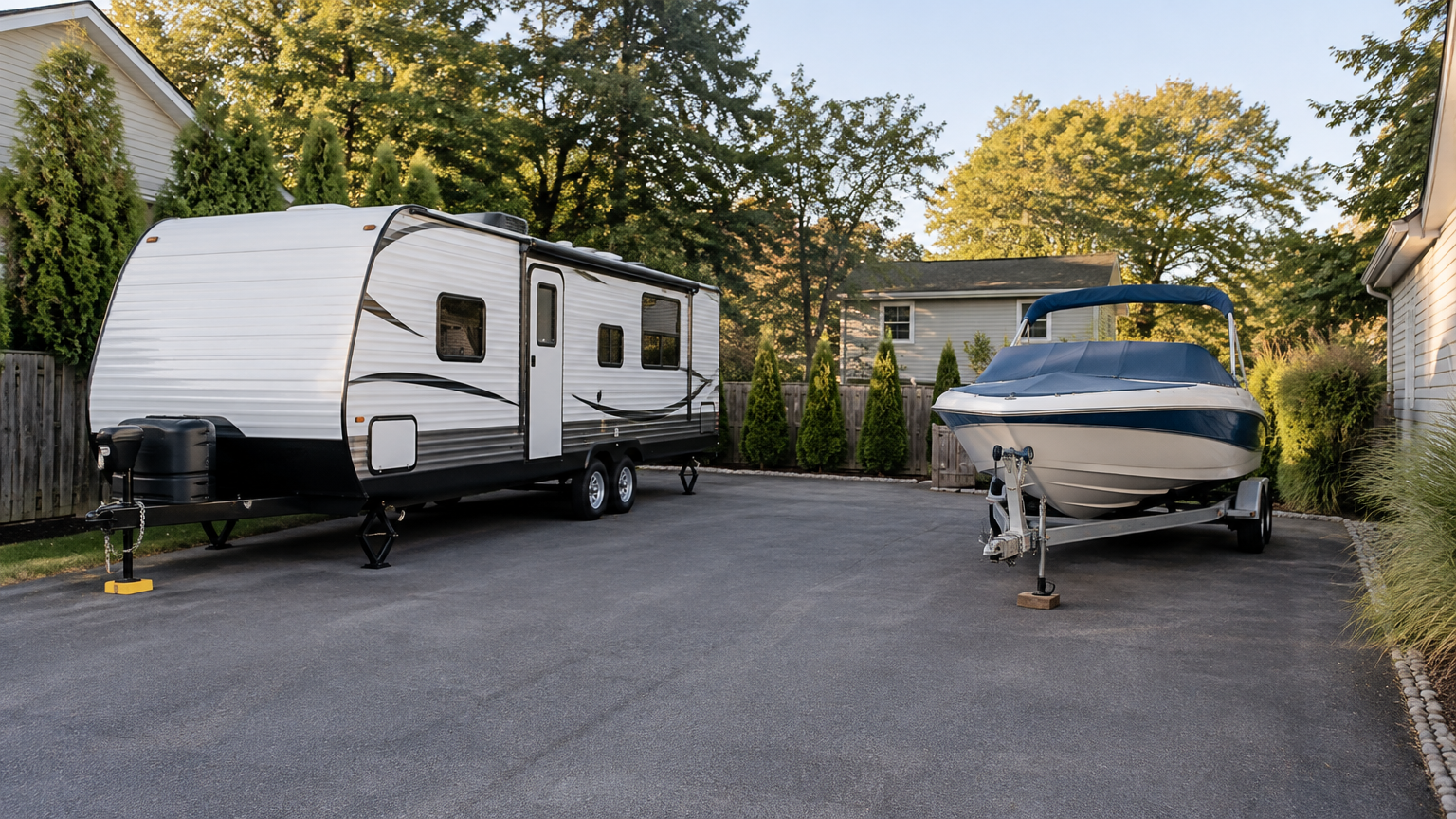
Can an RV or boat legally be stored on a residential lot?
Possibly, but there is no nationwide yes-or-no rule. Local zoning, code enforcement, HOA or condominium documents, lease terms, and the lot’s layout may all control the answer. Permission to store a vehicle also does not automatically allow camping, living in it, repairs, utility hookups, or commercial use.
A privately owned lot is not automatically free from restrictions. A city or county may regulate where a recreational vehicle, boat, or trailer can sit, how many may be stored, whether it must be operable or registered, and whether it needs screening from public view.
Private rules can add another layer. An HOA may prohibit driveway storage even when local zoning permits it. A landlord may also restrict a tenant from keeping an RV or boat on the property. If you are renting space to someone else, paid storage may raise separate questions about the property’s permitted use.
The safest answer is specific to the property. Check the rules that apply to the address, not just general advice found online.
Which property rules should you check before storing an RV or boat?
Before making an arrangement, check the five sources of permission that can affect the property: local zoning, code enforcement guidance, private community documents, lease terms, and insurance or responsibility questions. A favorable answer from one source does not cancel a restriction found in another.
City or county zoning rules. Search the local zoning code or contact the planning office to ask how it treats RVs, boats, trailers, and outdoor storage on the specific property. The zoning district, lot type, vehicle size, and proposed duration may matter.
Code-enforcement rules. Look for rules involving front yards, sidewalks, public visibility, utility access, abandoned or inoperable vehicles, driveway surfaces, and nuisance conditions. For example, Fairfax County explains that personally owned boats and vehicles may be allowed while also addressing outdoor storage and front-yard placement. Read its as a local example, not a national standard.
HOA or condominium documents. Review the declaration, CC&Rs, bylaws, parking policy, and house rules. These documents may address vehicle types, storage duration, towing, screening, guest parking, and enforcement. An HOA rule can be stricter than the city’s rule, so local approval alone may not be enough.
Lease and landlord permission. A tenant should read the lease and ask the landlord for written permission when the lease does not clearly address RVs, boats, trailers, outdoor storage, or subleasing. HUD housing-counselor materials identify parking location and parking fees as matters commonly covered in leases.
Insurance and responsibility questions. Ask the insurer whether the intended use creates any coverage questions. Clarify who is responsible for damage from towing, leaks, falling branches, weather, surface damage, theft, or unauthorized movement. Neither a private agreement nor a marketplace listing automatically proves that insurance will cover the stored property.
Local examples show why a broad internet answer can be misleading. Montgomery County, Maryland, describes conditions for parking one recreational vehicle on a residential lot, including off-street placement and rules involving sidewalks, utility lines, registration, and operation. Austin discusses limits and screening for certain recreational vehicles. Those examples illustrate variation rather than establish rules for every state.
Does the location of the RV or boat on the lot change the answer?
Yes. A driveway, front yard, side yard, rear yard, or vacant residential lot may be treated differently under local rules. Placement can affect setbacks, visibility, sidewalk access, utility access, fencing, landscaping, surface requirements, vehicle size, and whether the property is being used for storage rather than ordinary parking.
A front driveway is often the most visible location, which can make screening, setback, and neighborhood appearance rules especially important. A side or rear yard may be treated more favorably, but only if the vehicle can reach it without blocking a sidewalk, damaging a fence, crossing a restricted area, or interfering with utilities.
The lot’s surface matters as well. A large RV or boat trailer may need a stable area that can support its weight without damaging grass or creating drainage problems. Some local rules distinguish between paved and unpaved storage, while others focus more on visibility or placement.
Size can change the result. Denver zoning provisions distinguish between recreational vehicles and trailers based partly on length and address matters such as rear-yard placement, screening, enclosed storage, and front setbacks. A small boat trailer may fit where a long fifth-wheel trailer does not.
Screening requirements also vary widely. Contra Costa County, California, describes a local rule allowing boat and recreational vehicle storage when most of the vehicle’s mass is screened from public view. Austin gives a local example involving recreational vehicles behind a six-foot wood or masonry fence. These are not nationwide requirements.
A vacant residential lot deserves extra caution. Its zoning designation may not authorize outdoor storage simply because no home has been built there. A developed lot may have different rules from an undeveloped parcel, and a property owner may need to consider access, drainage, utilities, construction plans, and nearby residents.
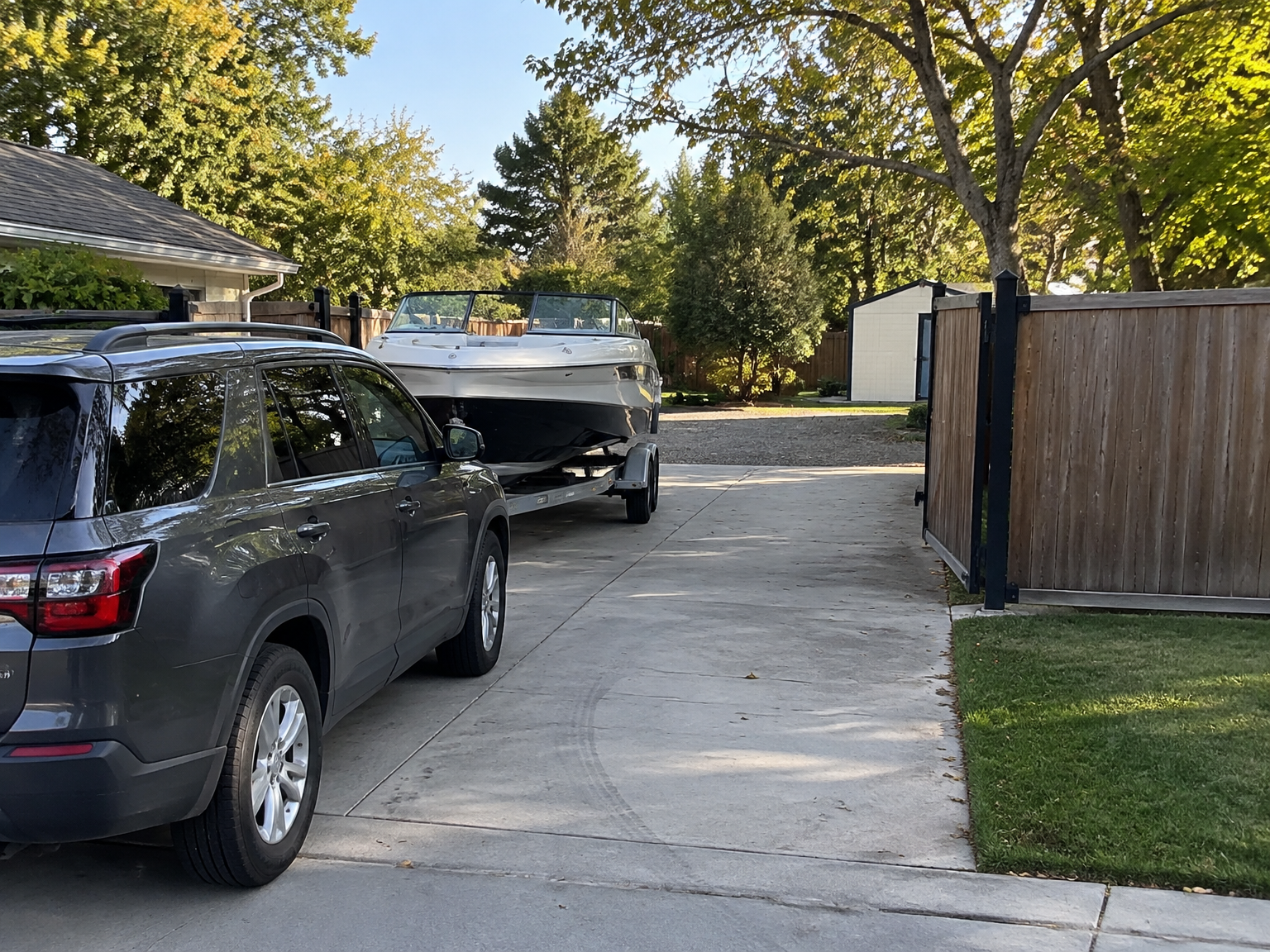
Residential lot entrance with space for RV or boat access
What should an RV or boat owner inspect before renting residential storage space?
A listing can look suitable in a photo and still be difficult to use with a large vehicle or trailer. Inspect the six practical site details below, then confirm that the host specifically accepts your type of RV, boat, or trailer.
Lot dimensions. Compare the available length and width with the full length of the vehicle, trailer, hitch, and any required clearance around it. Ask whether the stated dimensions describe the entire lot or only the parking area.
Gate and driveway width. Measure the narrowest entrance, not just the width near the street. Check gate posts, fence corners, retaining walls, mailboxes, parked cars, and other obstacles that could limit entry.
Turning and towing space. Consider how the vehicle will enter, leave, and be positioned. A trailer may need more room than expected, especially if you must back into a side yard or make a sharp turn from the street.
Surface and slope. Ask whether the area is paved, gravel, grass, or another surface. Look for steep grades, soft ground, low spots, drainage concerns, and conditions that could make leveling or moving the vehicle difficult.
Overhead clearance. Check tree branches, roof overhangs, wires, lights, and other obstacles. Measure the vehicle’s height with roof equipment, air conditioners, antennas, or other attachments included.
Access timing and instructions. Confirm when you may enter, whether advance notice is required, and who handles gate access. Ask whether you can move the RV or boat during the booking and whether the host needs notice before a pickup or return.
A renter should also ask what kind of storage the listing provides. Outdoor storage may expose the vehicle to sun, rain, snow, falling limbs, or neighborhood activity. Indoor and outdoor spaces have different practical conditions, and not every lot listing accepts long-term storage, boats, RVs, or trailers.
Review the listing details, photos, available dates, price, and access instructions carefully. If an important measurement or rule is missing, ask before booking rather than assuming the space will work.
You can browse available lots on Parking Mate to compare spaces where the host allows the intended use. The listing is a starting point for communication, not proof that your HOA, lease, insurer, or local government approves the arrangement.
What must a homeowner confirm before offering a residential lot for storage?
A homeowner considering paid storage should confirm four separate points: the property can legally support the use, private rules allow it, the space is safe and suitable for the advertised vehicle, and the parties understand access and responsibility. A listing should describe the space honestly instead of promising approval or protection.
Confirm the permitted use. Check zoning, code enforcement guidance, HOA or condominium documents, and any applicable landlord restrictions. If the property is rented, the owner or landlord may need to approve the arrangement. Paid storage can raise different questions from storing your own vehicle.
Confirm the space can handle the vehicle. Measure the entrance, storage area, turning path, surface, slope, and overhead clearance. Decide which vehicles you will accept, such as a small boat trailer, travel trailer, motor home, or fifth-wheel trailer.
Confirm the operating rules. State whether access is available at all times, whether appointments are needed, whether the renter may move the vehicle, and whether repairs, washing, unloading, camping, or utility hookups are prohibited. Clear rules reduce disagreements later.
Confirm insurance and damage responsibilities. Ask an insurer about the intended arrangement and discuss responsibility for damage to the property or stored vehicle. Consider issues such as towing damage, leaks, weather, falling branches, surface damage, and unauthorized access. Do not promise that a homeowner’s policy or a marketplace covers every loss.
Good listing language should include the accepted vehicle type, maximum dimensions if known, surface conditions, access limitations, availability, and any host-set rules. Photos should show the entrance and storage area from useful angles, while avoiding claims that the location is legally approved unless you have confirmed that directly.
A homeowner may also want a simple written agreement covering the booking dates, payment, access, prohibited activities, vehicle information, and what happens if the space becomes unavailable. The agreement should match the listing and should not conflict with local rules or insurance terms.
For more information about creating a listing, learn how to become a Parking Mate host. Parking Mate lets hosts add space details, photos, prices, availability, and access rules, but the host remains responsible for confirming that the property may be used for the advertised purpose.
Can Parking Mate be used to find or offer residential RV and boat storage?
Yes, Parking Mate supports lot and outdoor listings when the host allows the intended use. Hosts can add details, photos, prices, availability, and access rules. Renters can review listings, book dates, pay through Stripe, and follow arrival instructions, but a listing is not proof of zoning, HOA, lease, insurance, or legal approval.
For renters, the platform can make it easier to compare available outdoor or lot spaces instead of relying on an informal cash arrangement. Still, ask questions about measurements, access, surface conditions, storage duration, and accepted vehicle types before booking.
For hosts, the main responsibility comes before the listing goes live. Confirm that the property rules permit the use, then describe the space accurately. If you only accept a boat trailer under a certain length, say so. If the space is outdoor, gated, sloped, or available only during certain hours, include that information.
Parking Mate is a marketplace connection, not a lawyer, insurer, zoning verifier, or guarantee of protection from damage. The appearance of a listing does not establish that the renter’s local rules, HOA, lease, or insurance policy permits the arrangement.
If you are comparing outdoor options, you can explore outdoor spaces and review the details provided by each host. When the listing does not answer an important question, contact the host before confirming the booking and keep the final instructions available for arrival.
Possibly, but a driveway is not automatically approved for long-term RV storage. Local zoning, front-yard rules, HOA documents, lease terms, screening requirements, and the vehicle's size may all affect whether it is allowed.
Can you store a boat on residential property?
A boat may be stored on residential property in some locations, but local rules can regulate its placement, trailer, size, screening, registration, and visibility from the street. Private community rules may be stricter.
Does permission to store an RV allow someone to live in it?
No. Permission to store or park an RV does not automatically authorize camping, living in the vehicle, utility hookups, repairs, or commercial activity.
Can a homeowner rent out part of a lot for RV or boat storage?
Possibly, if local rules, private property documents, insurance considerations, and the property's physical layout allow paid storage. The homeowner should confirm the use before creating a listing.